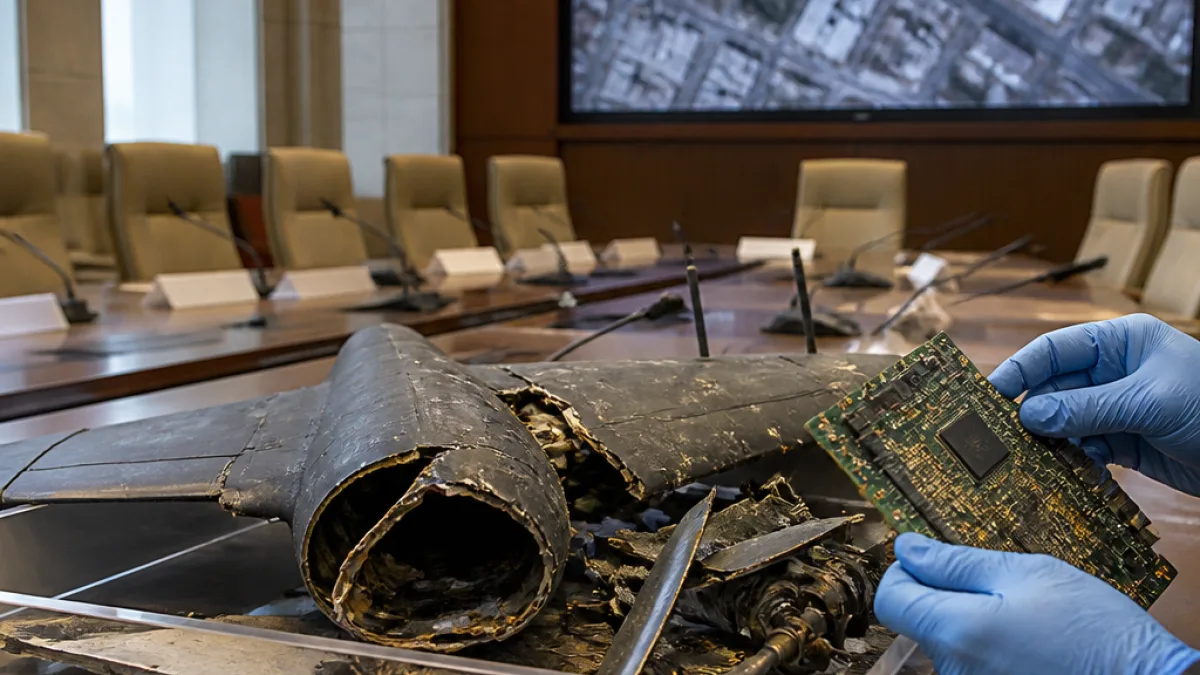
One hundred and twenty‑eight states party to the Convention on Certain Conventional Weapons (CCW), including India, will meet in Geneva from 16–20 November 2026 to decide whether to begin negotiating a treaty on weapons that can choose their own targets, the Hindustan Times reported on 24 October 2026. The meeting follows a New York Times investigation into a deadly episode in Ukraine on 6 July 2026, in which a small fixed‑wing drone struck an apartment building in Zaporizhzhia after investigators concluded the aircraft had flown without a human radio link and its software had “chosen what to hit”.
What investigators reported about the Zaporizhzhia strike
According to the New York Times investigation, cited by Hindustan Times, the drone and several others were launched toward a petrol station about 14 km from the front line. The aircraft that hit the apartment block carried video cameras but no radio antennas connecting it to an operator, and Ukrainian forensic investigators who examined wreckage said the drone’s onboard computer had been trained to recognise certain targets and likely selected propane tanks as the preferred aim.
The investigation found an Nvidia Jetson Orin module inside two of the drones; the report noted the module is sold commercially and was not encrypted, allowing investigators to read terrain images stored on the devices, as reported by Hindustan Times. Ukrainian officials told the Times the absence of a radio link was a factor in their conclusion that the drone had flown without a pilot.
Hindustan Times reported the civilian toll from the strike: Tetiana Bubynets, 19; Oleksiy Svirin, 41; and Roman Karpiy, 48 died of injuries sustained when the drone exploded near people sheltering in the building. The newspaper said investigators reached their findings after examining the wreckage and the modules recovered from the drones.
The diplomatic context in Geneva
The CCW provides a forum for states to discuss weapons deemed excessively injurious or indiscriminate. Delegations have debated autonomous weapons for more than a decade; Hindustan Times said that in early September 2026 governments agreed on a text defining such weapons and setting out potential limits, a step described in the paper as preparatory to negotiating binding rules. The agreed text has not been published, the report added.
- Meeting: CCW states parties, Geneva, 16–20 November 2026
- States: 128 CCW parties, India included, will participate
- Incident cited: 6 July 2026 Zaporizhzhia strike investigated by the New York Times and Ukrainian authorities
The Hindustan Times piece draws a direct line between battlefield incidents in Ukraine and the push in Geneva to consider legal controls on systems with autonomous targeting functions. It attributes the technical and forensic findings to the New York Times investigation and to Ukrainian investigators and officials.
For India — a CCW state party participating in the Geneva discussions — the episode and the diplomatic timetable place autonomy, target recognition software, commercial computing modules and encryption squarely in the frame of international debate. The Hindustan Times report and the New York Times investigation are the bases for the factual claims about the Zaporizhzhia incident; the legal and policy questions will be taken up by states in Geneva during the 16–20 November meeting, as reported.