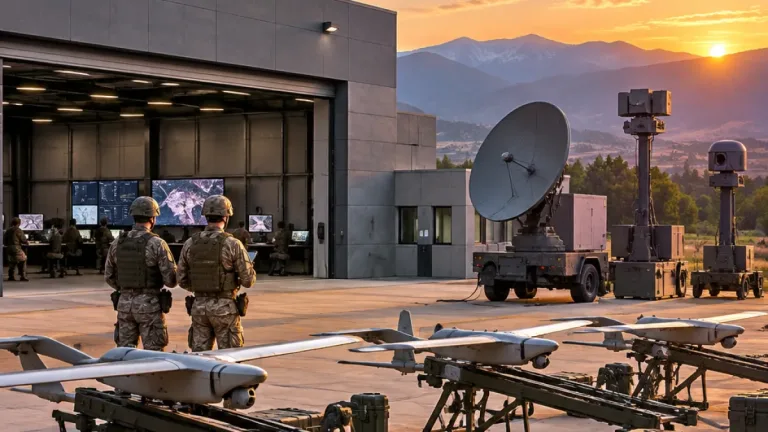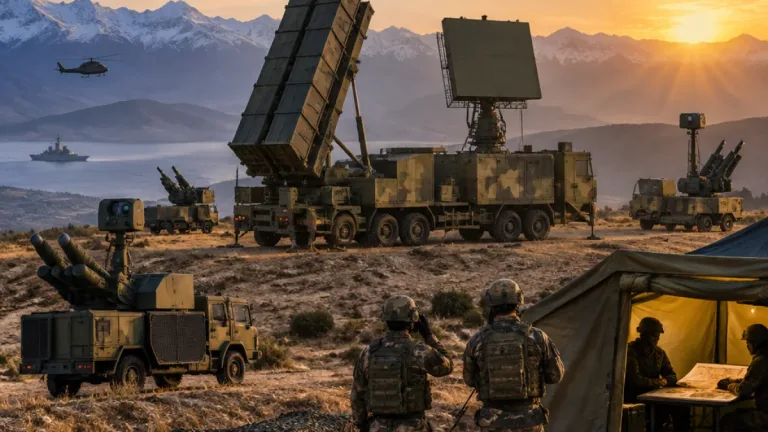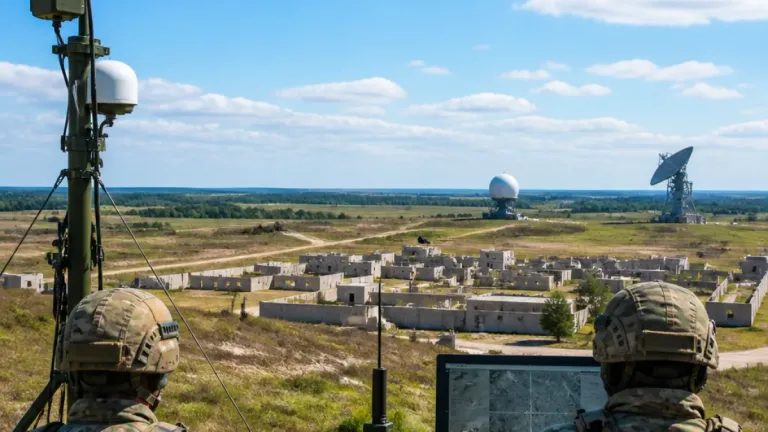

The European Union is approaching a key deadline for its planned regional drone and counter-drone architecture, with the European Drone Defence Initiative expected to achieve initial capacity by 31 December 2026. The project is part of the European Commission’s Defence Readiness Roadmap 2030, which also includes Eastern Flank Watch, a proposed framework focused on the bloc’s eastern security environment.
“initial capacity” — European Commission’s Defence Readiness Roadmap 2030
The roadmap set the end of 2026 as the target for initial capacity in both projects. Full capability for the European Drone Defence Initiative was scheduled for the end of 2027, while Eastern Flank Watch was assigned a later target of the end of 2028. The deadlines have acquired greater significance after repeated disruptions and airspace incidents across parts of Europe.
Projects carry large indicative price tags
EU member states approved Eastern Flank Watch as a joint defence project on 28 September 2026. Its indicative investment requirement was placed at between €60 billion and €100 billion by 2036. A separate drone and counter-drone project was assigned an indicative value of €3.5 billion to €5 billion by 2033.
| Programme | Target or indicative value | Timeline |
|---|---|---|
| European Drone Defence Initiative | Initial capacity | By 31 December 2026; full capability by end-2027 |
| Eastern Flank Watch | €60 billion–€100 billion | Investment by 2036; full capability by end-2028 |
| Drone and counter-drone project | €3.5 billion–€5 billion | Investment by 2033 |
However, the funding already set aside is much smaller than the long-term ambition. The five approved EU defence projects have received €325 million in programme money so far, compared with a stated funding ambition of approximately €190 billion by 2036. The gap places emphasis on national contributions and the ability of member states to turn agreed frameworks into equipment, sensors, command networks and operational arrangements.
Airspace incidents accelerated the timetable
The European debate over a so-called “drone wall” intensified after a series of incidents in 2025 and 2026. Poland recorded 19 airspace violations in about seven hours in September 2025, after which allied aircraft helped shoot down drones that had crossed from the east, according to the account cited in the report. Less than two weeks later, Copenhagen airport halted traffic after police reported two or three large drones in the area, Reuters reported.
On 15 September 2026, NATO aircraft shot down a drone over Lithuania for the first time, according to the report. Vilnius airport had also been disrupted nine times by smuggling balloons during the first half of 2026. These incidents have pushed European governments to consider counter-UAS defence as a networked requirement rather than a collection of isolated systems.
- Initial capacity for the European Drone Defence Initiative is due by 31 December 2026.
- Eastern Flank Watch carries an indicative investment range of €60 billion to €100 billion by 2036.
- Only €325 million has so far been allocated across five approved EU programme projects.
A leaked draft of the European Commission’s 2027 work programme, reported by Euronews, said counter-drone investment increased sixfold between 2024 and 2025. The same account said only one-third of EU counter-drone programmes were expected to deliver by 2030. The contrast between the expanding threat environment, ambitious investment plans and slow programme delivery is now central to the debate over what the “drone wall” will actually provide before the end-2026 deadline.
For defence planners in India, the European programme is a prominent example of how airspace protection is being organised around layered counter-drone capabilities and multinational cooperation. The measures described concern EU member states and do not announce an Indian procurement or participation decision. Their immediate significance lies in the scale and urgency with which European governments are treating small unmanned aerial systems as a continuing defence requirement.