Ukraine's defence ministry said on Saturday that its connection to Starlink has returned to a stable state and now supports speeds above 400 km/h, reversing limits that had constrained operations for several days. Kyiv had reported that the network previously cut connections when drones and other systems exceeded about 161 km/h (100 mph), disrupting battlefield use.
What happened and who said it
Defence Minister Yevhenii Khmara said the network’s restored capability was “above all important for our front, for our soldiers, for the operation of drones, for logistics and for communications.” The statement followed days in which Ukraine reported restricted connectivity on the Starlink satellite internet service operated by SpaceX and on the company’s military-focused Starshield offering.
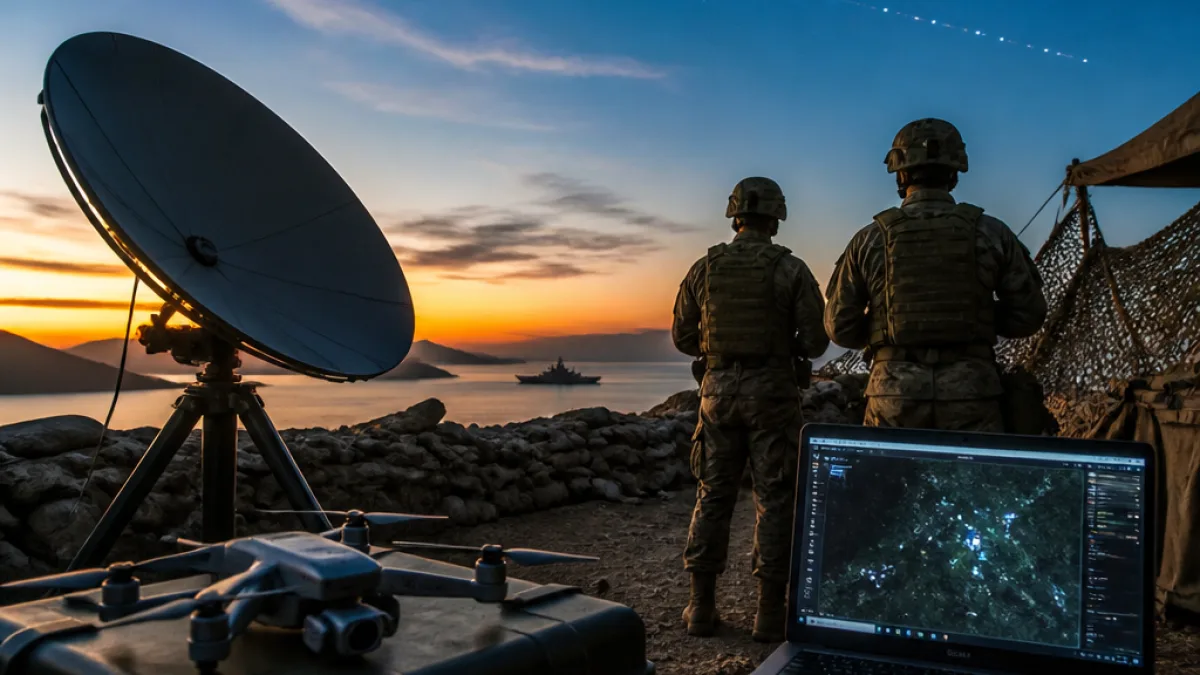
Kyiv uses both the civilian Starlink service and the more secure Starshield for piloting drones and for other military tasks, particularly in remote areas. The disruption began last week amid a diplomatic dispute between US President Donald Trump and Ukraine’s president over Ukrainian strikes on Russian oil infrastructure. Ukraine accused Mr Trump of instructing Elon Musk to impose limits on Starlink in Ukraine; Mr Trump denied that allegation before saying that Mr Musk had “put it back.”
“This result is above all important for our front, for our soldiers, for the operation of drones, for logistics and for communications,” said Defence Minister Yevhenii Khmara.
Technical and operational points
- Ukraine reported that a prior restriction cut connectivity for platforms travelling faster than 161 km/h.
- Kyiv now reports speeds supporting movement above 400 km/h, which it interpreted as restoration of full capability.
- Starshield is described by Elon Musk as a military-grade counterpart; Musk has said the US military controls Starshield when discussing the cause of past issues.
SpaceX operates a global low Earth orbit satellite network that Ukraine has relied on extensively for battlefield communications and remote operations. The company has said that Starshield is a more secure product tailored to government and military customers, and Musk has suggested the Pentagon could be involved in its control when he sought to explain recent restrictions.
International context
The connectivity row unfolded as part of a broader diplomatic disagreement over Ukrainian strikes on Russian energy infrastructure. Kyiv has said its long‑range strikes on refineries are aimed at reducing revenue for Moscow’s war effort; the network reportedly does not function for missions inside Russian territory because Russia is not authorised to use Starlink. The dispute also arose amid moves by the US administration regarding sanctions and energy imports that Kyiv and European partners criticised.
For defence planners and forces that increasingly depend on commercial satellite internet for command-and-control, reconnaissance and unmanned systems, the episode underlines the vulnerability of operational dependence on networks controlled by private companies and subject to political pressures. Kyiv’s report of restored connectivity was presented by its defence ministry as a return of capabilities needed at the front.