The proposed 11,200‑megawatt Siang Upper Multipurpose Project (SUMP) in Arunachal Pradesh has moved from feasibility discussions to confrontations, with protests turning violent and public order incidents in Pasighat on 23 October, Hindustan Times reported on 25 October 2026. The project, promoted by the state and the National Hydroelectric Power Corporation (NHPC), is presented by officials as having geostrategic importance in the face of China’s much larger hydropower complex upstream.
Why the government says the dam matters
State authorities and proponents argue SUMP is necessary to counter the impact of Chinese water‑infrastructure on the Yarlung Tsangpo (which becomes the Siang within Indian territory). Hindustan Times reported that officials view India’s project as a strategic safeguard against Beijing’s development on the lower reaches of the Yarlung Tsangpo in Tibet.
The Chinese complex, commonly called the Medog hydropower project, was formally launched in July 2025, and the Hindustan Times article cites an estimated generation capacity of around 60,000 MW and an announced investment of 1.2 trillion yuan. Indian authorities say regulation upstream could alter river flows and that a domestic multipurpose project would help manage floods and water security in downstream states.
Why residents are resisting
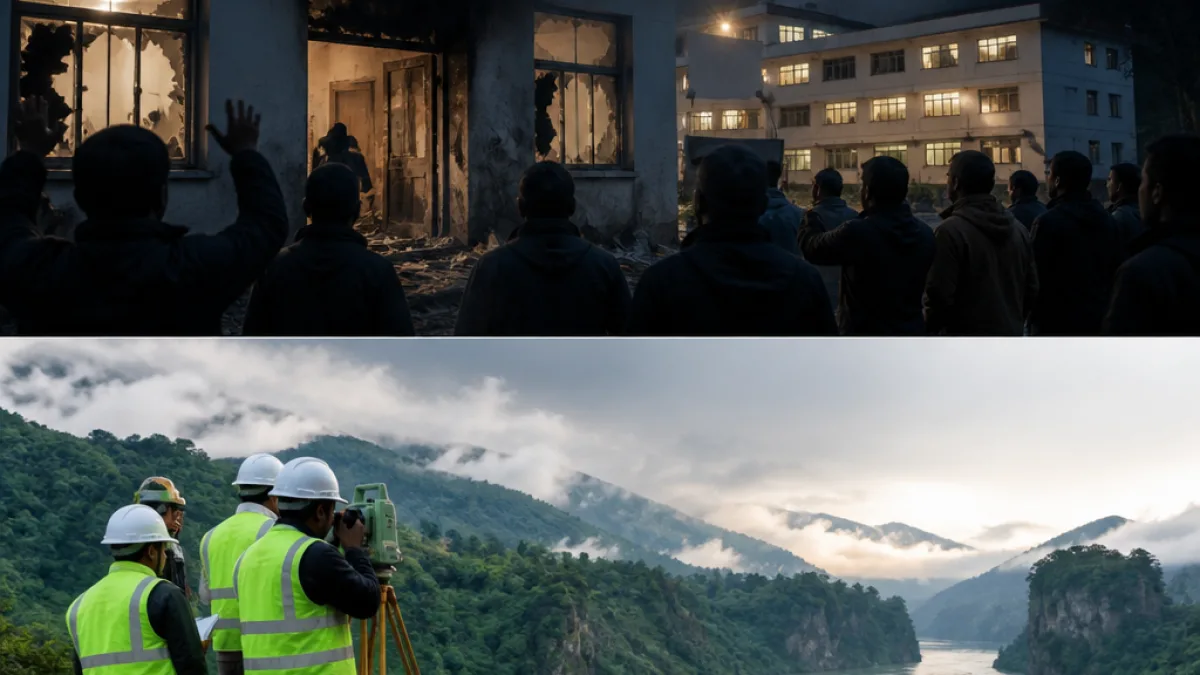
Locals in the Siang valley have long expressed concerns that the dam will cause displacement and ecological damage. Hindustan Times reported protesters’ fears that the project would flood villages, force people from ancestral land, inundate farmland and affect sites of heritage importance. Initial survey activity, security deployments and arrests of people opposing the survey heightened tensions.
- Local grievances: potential displacement, ecological impact and loss of heritage sites
- Security incidents: clashes between villagers and security forces, and arson at a Pasighat police station and an NHPC office on 23 October
- Government position: Chief Minister Pema Khandu told Hindustan Times that no final decision has been taken to construct the dam and that the state is exploring feasibility
Hindustan Times said competing claims have emerged over injuries and arrests following the clashes. The article notes that while the chief minister emphasised that feasibility is being studied and no construction decision has been made, protesters remain unconvinced and fear that even survey activity may lay the groundwork for eventual construction.
The strategic context: China’s Medog complex
The coverage links the debate over SUMP directly to Beijing’s hydropower plans on the Yarlung Tsangpo. Hindustan Times described the Medog project as significantly larger than SUMP and a driver of Indian concern about river regulation. The newspaper reported Chinese authorities’ July 2025 announcement of the Medog complex with the capacity and investment figures cited above.
| project | capacity | official investment (as reported) |
|---|---|---|
| Siang Upper Multipurpose Project (SUMP) | 11,200 MW | — (feasibility under study) |
| Medog hydropower complex (China) | around 60,000 MW | 1.2 trillion yuan |
Hindustan Times framed the Indian project as part of a response to China’s upstream works; the newspaper reported official concern about possible consequences of upstream water regulation but did not supply technical modelling or definitive impact assessments.
Consequences and immediate developments
The protests and the Pasighat incidents underline the domestic challenge of implementing large infrastructure projects in sensitive border regions. Hindustan Times recorded that preliminary survey operations, heavy security presence and arrests of opponents aggravated local sentiment. The article records that NHPC facilities were attacked and a police station was set on fire on 23 October.
Chief Minister Pema Khandu is reported to have told Hindustan Times that the government has not decided to build the dam and is only exploring feasibility. Protesters, meanwhile, say that even feasibility surveys threaten the social and environmental fabric of the valley.
The Hindustan Times reporting places SUMP at the intersection of regional development, environmental and indigenous rights concerns, and national security calculations driven by Chinese upstream infrastructure.
“What began as opposition to preliminary survey activities has escalated into violent clashes between villagers and security forces,” Hindustan Times wrote on 25 October 2026.
All details in this article are drawn from the Hindustan Times report published on 25 October 2026.