US Secretary of State Marco Rubio said on 13 November 2026 that Washington does not consider further military action against Iran necessary at present, arguing that economic pressure has weakened the Islamic Republic and can advance US objectives without additional strikes.
Speaking at an event hosted by the Federalist Society, Rubio said the administration’s stated end goal was to prevent Iran from acquiring a nuclear weapon. His remarks followed US President Donald Trump’s assertion earlier in the week that the conflict was “militarily effectively over”. The statements indicate that Washington is presently presenting economic pressure, rather than a new round of attacks, as its principal instrument against Tehran.
“But I think victory is ensuring that they never have a nuclear weapon.”
— US Secretary of State Marco Rubio
Washington acknowledges economic costs
Rubio also recognised that the conflict has imposed costs on the United States and the wider global economy. He said the fighting had contributed to higher fuel prices and disruptions across nearly every sector of the global economy. Rubio argued that Trump could have left Iran’s nuclear programme for a future administration but instead chose to address what Washington regards as a continuing threat.
The Secretary of State said the administration understood the hardship caused by that decision. He described the consequences as difficult, while maintaining that the US had decided not to leave the issue unresolved.
US and Iran give conflicting accounts of Bahrain incident
The US military said it intercepted two Iranian attack drones travelling towards Bahrain on Friday. US Central Command, which covers the region, said there were no injuries or damage as a result of the interception.
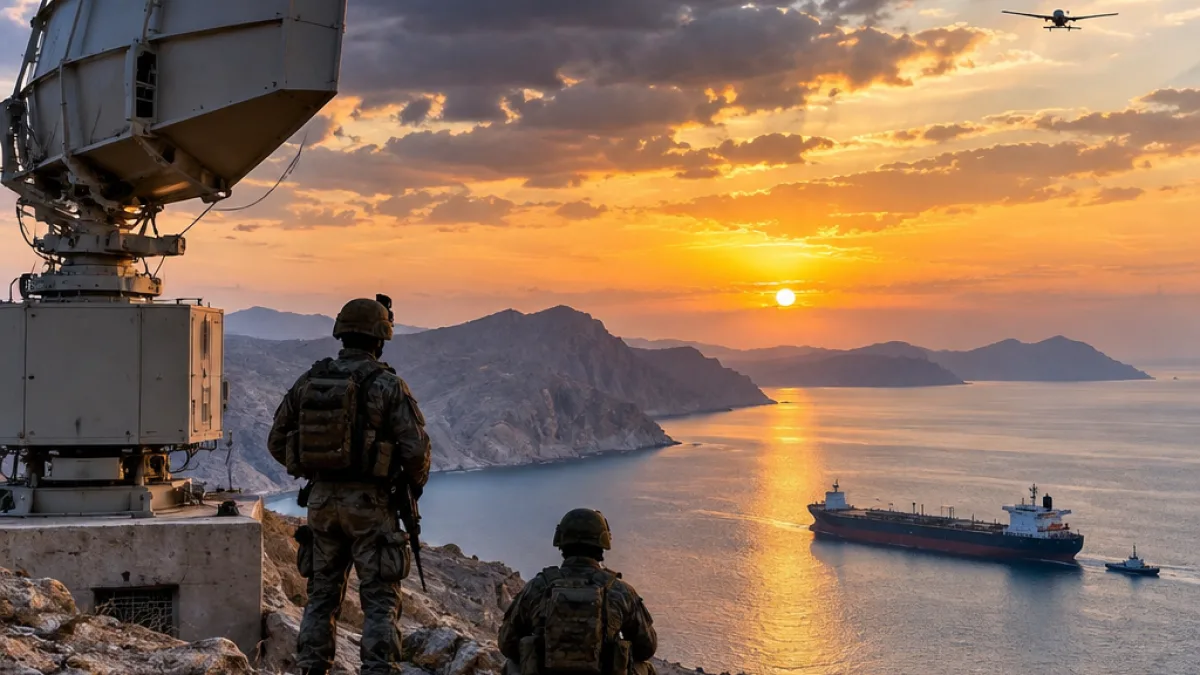
Iran’s official IRNA news agency, citing a statement from the Islamic Revolutionary Guard Corps, said Iranian forces had struck a US early-warning radar system in Bahrain. The report said the alleged operation followed a US strike on a telecommunications pole in the southern Iranian port of Sirik. The competing accounts could not be independently reconciled in the information reported by the two sides.
- Rubio said additional US military action against Iran was unnecessary because of the effect of economic pressure.
- The US military said two Iranian drones headed towards Bahrain were intercepted without casualties or damage.
- Iran’s Revolutionary Guard claimed it had hit a US radar installation, while Iran also said a tanker struck a naval mine while attempting to transit the Strait of Hormuz.
Strait of Hormuz claim adds to regional tension
Iran also said that a tanker had struck a naval mine while attempting to sail through the Strait of Hormuz, a major maritime passage linking the Gulf with the Gulf of Oman. The report provides no further verified details about the vessel, the location of the incident or any casualties. The allegation was reported alongside the conflicting US and Iranian accounts of the Bahrain episode.
For Indian readers, the developments place the reported US policy shift alongside two unresolved security issues in the Gulf: the status of American military assets in Bahrain and the safety of shipping through the Strait of Hormuz. The account also links the confrontation to higher fuel costs and disruption across global economic sectors, while neither Washington nor Tehran has presented the other side’s claims as accepted fact.