India’s ability to expand military use of satellites, unmanned systems and advanced aerospace platforms is being constrained by shortages in specialised personnel and gaps in training infrastructure, government figures and space agency statements show.
Staffing shortfalls in the Department of Space
In a written reply to the Lok Sabha on 11 February 2026, the Minister of State in the Prime Minister’s Office, Dr Jitendra Singh, provided the Department of Space’s sanctioned and filled posts. Against a combined sanctioned strength of 18,142 posts (14,108 Scientific & Technical; 4,034 Administrative), the department had 15,529 officers and staff in post — a vacancy of 2,613, or a staffing level of 85.6%. Recruitment action was under way for 1,449 vacancies, with the department aiming to complete those hires by October 2026; action on the remaining 933 posts had not been initiated, the reply said.
ISRO Chairman V. Narayanan told the public that during Operation Sindoor in May 2025, at least 10 satellites were kept on standby continuously to support the armed forces’ operational requirements. That operational reliance contrasts with the workforce shortfall disclosed to Parliament and underlines the human‑resource pressure on India’s space support for defence missions.
Education pipelines and specialised courses
Military space, satellite systems and unmanned aerial vehicle programmes depend on a narrow set of academic disciplines and laboratory resources. The Indian Institute of Space Science and Technology (IIST) is India’s only dedicated space university and offers undergraduate B.Tech majors including Aerospace Engineering and Electronics & Communication Engineering, plus dual‑degree and postgraduate options in subjects such as satellite systems and space communications.
- IIST provides a focused curriculum but remains the sole dedicated national institute for space education.
- Defence reliance on advanced space assets increases demand for engineers with specialised skills in satellite design, RF communications, payload integration and mission planning.
- Laboratory and industrial partnerships are essential to translate academic training into deployable defence capability.
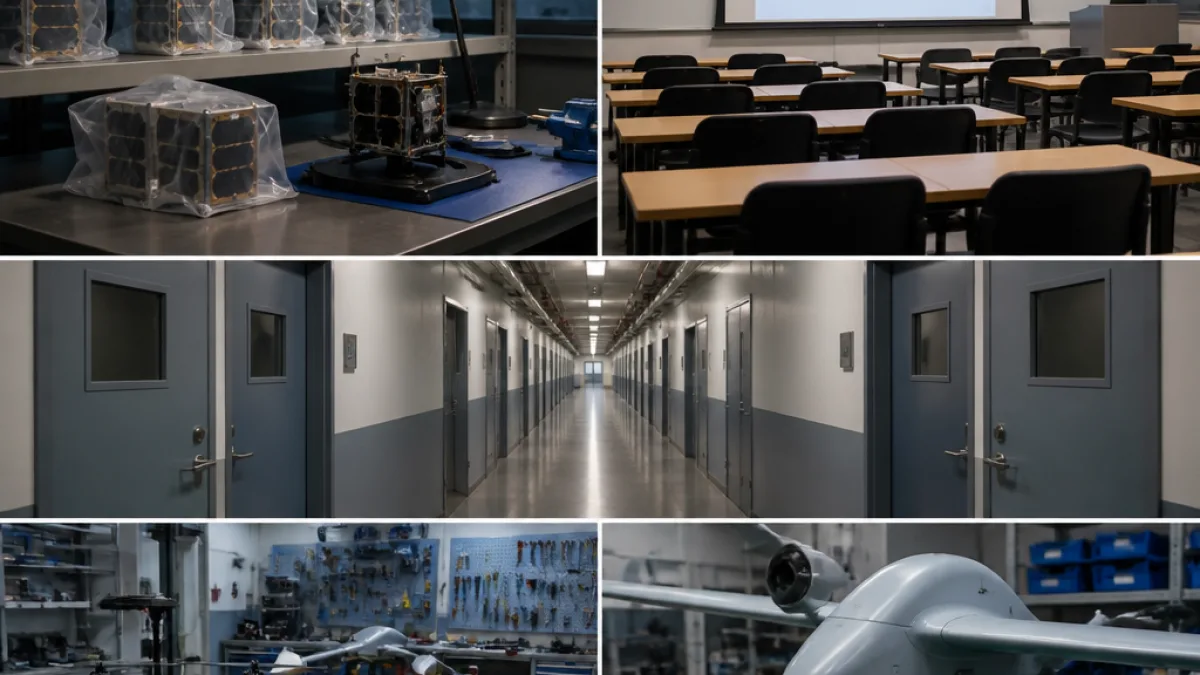
The Hindu report highlights that classroom capacity, laboratory equipment and a limited number of specialised degree programmes constrain how quickly India can enlarge the pool of engineers needed by the armed forces and defence industry for both space and drone platforms.
What the figures mean for force preparedness
The combination of high operational demand — demonstrated by multiple satellites kept on standby for conflict support — and significant vacancies in the Department of Space contributes to a strain on personnel and on recruitment timelines. The government’s stated plan to fill 1,449 vacancies by October 2026 is a near‑term mitigation, but nearly one thousand posts had no recruitment action initiated as of the Lok Sabha reply.
| Category | Sanctioned | Filled | Vacant |
|---|---|---|---|
| Scientific & Technical | 14,108 | — | — |
| Administrative | 4,034 | — | — |
| Total | 18,142 | 15,529 | 2,613 |
The report does not claim that staffing shortfalls directly caused any specific mission failure, but it presents the staffing data alongside operational disclosures to underline a capacity gap that could affect sustainment, timely launches and expansion of military space services.
Expanding graduate programmes, strengthening laboratory networks and accelerating recruitment in the Department of Space are among the operational and institutional challenges the government has acknowledged publicly. The figures published in Parliament set a measurable baseline for monitoring progress on those tasks.