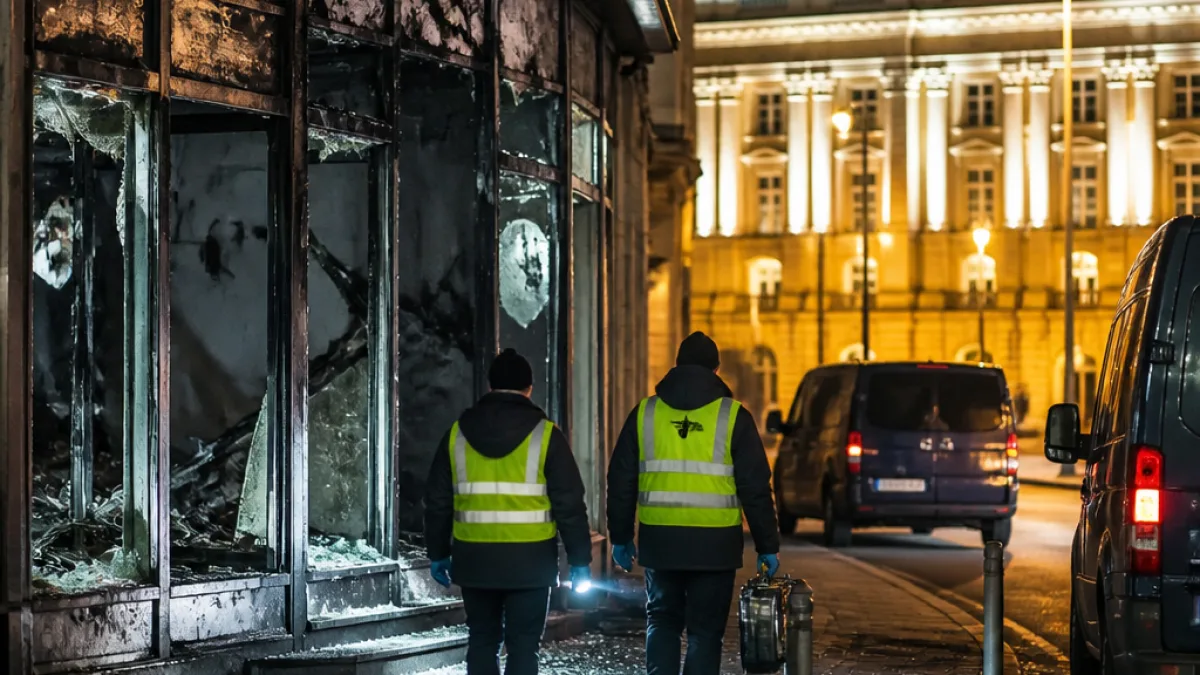
BUCHAREST — Romania's leadership has accused Moscow of orchestrating an act of sabotage on Romanian soil after national agencies said they had identified a network linked to a fire that damaged commercial premises in central Brasov County on 14 September.
Romanian response and investigations
President Nicusor Dan described the alleged plot as a “grave violation” of Romania’s sovereignty and security on Tuesday, after the Romanian Intelligence Service released findings it says point to a Russia‑coordinated sabotage effort. Romania’s Ministry of Foreign Affairs summoned the Russian ambassador in Bucharest to present evidence gathered during investigations, the ministry said.
“I condemn, in the strongest possible terms, any involvement by the Russian Federation in acts of sabotage on Romanian territory,” Dan said in a post on Facebook. “Such actions are unacceptable and constitute a grave violation of our country’s sovereignty and security.”
Romania’s anti‑organised crime agency, DIICOT, said on Monday that three foreign nationals — two Belarusians and one Ukrainian, all residing in EU countries — were being investigated in connection with the Brasov fire. DIICOT added that two suspects were arrested in Germany while “preparing to commit similar acts,” and that a European arrest warrant had been issued for another defendant located in Poland; the agency said it is seeking extradition of all three to Romania.
Evidence and public disclosures
Video material released by Romania’s intelligence service showed an individual climbing a building fire escape, followed by short flashes and flames that engulfed the structure. The footage also shows two people cycling away from the scene. Romania’s foreign ministry said investigators had presented evidence from their inquiries to the Russian diplomat summoned on Tuesday.
Russia did not immediately comment on the allegations; Moscow has repeatedly denied involvement in sabotage operations against European countries in other cases.
Broader context
Romanian officials framed the incident as part of a wider campaign of hybrid actions that they say Moscow has used to undermine European security in the wake of the Kremlin’s war in Ukraine. President Dan and the foreign ministry presented the discoveries as evidence of a deliberate attempt to damage Romanian sovereignty and the safety of citizens.
- Incident date: fire in Brasov County on 14 September
- Authorities involved: Romanian Intelligence Service, Ministry of Foreign Affairs, DIICOT
- Persons under investigation: three foreign nationals — two Belarusians and one Ukrainian (residing in EU states)
- Law‑enforcement action: two arrests in Germany; European arrest warrant issued for a suspect in Poland; extradition sought
The Romanian statements follow a pattern seen in several European countries where authorities have pointed to foreign‑linked sabotage or covert action as part of hybrid pressure related to the Russia‑Ukraine war. Bucharest’s decision to summon the Russian ambassador signals that Romania regards the matter as more than a criminal incident and as one with diplomatic and security implications.
Romania is a NATO member bordering the Black Sea and has been among NATO states expressing concern about spillover effects and hybrid threats linked to the conflict in Ukraine. The Romanian government’s public presentation of video evidence and its notification of the Russian embassy mark a diplomatic escalation tied to the investigation.
| Item | Detail |
|---|---|
| Location | Brasov County, central Romania |
| Event | Fire at commercial premises on 14 September |
| Investigating agencies | Romanian Intelligence Service, DIICOT, Ministry of Foreign Affairs |
| Suspects | Two Belarusians and one Ukrainian (residing in EU countries) |
| Recent action | Two arrests in Germany; European arrest warrant for third suspect in Poland; extradition sought |
Romania’s public account is the Kremlin’s description of the events’ origins; independent verification of the intelligence details released by Bucharest has not been provided in the Romanian statements. The Kremlin routinely denies such allegations when raised by European capitals.
The Romanian government’s handling of the case — combining criminal probes with diplomatic démarches — reflects a broader European approach to perceived foreign sabotage and hybrid threats since Moscow’s full‑scale invasion of Ukraine. Bucharest’s moves may also prompt closer scrutiny by NATO partners as they assess hybrid‑threat trends and responses in allied capitals.