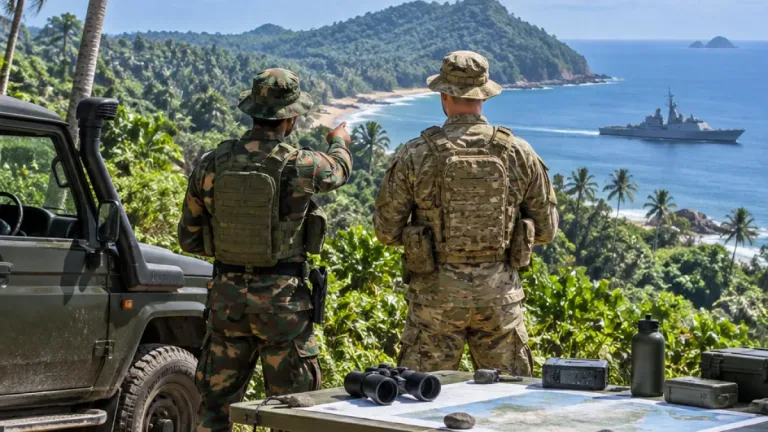
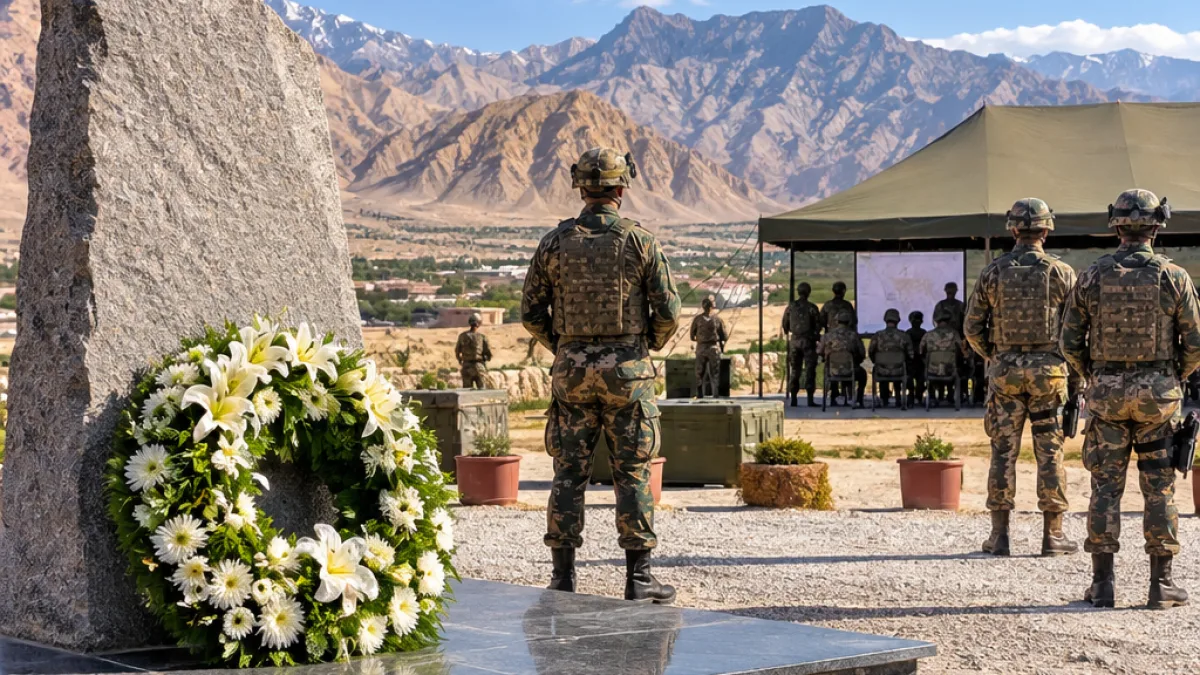
Field Marshal Syed Asim Munir visited Turbat in Balochistan, where Pakistan’s military leadership reviewed security operations and socio-economic initiatives in the province. The visit also included a memorial ceremony for fallen Pakistan Army personnel, according to the Inter-Services Public Relations (ISPR).
During the ceremony, Munir laid a floral wreath and offered Fateha in remembrance of soldiers who lost their lives. The observance placed the military’s counter-terrorism role alongside its public message on stability and development in Balochistan, a province where security concerns and economic challenges have remained closely linked in official Pakistani statements.
“The Pakistan Army stands shoulder to shoulder with the people of Balochistan.”
Security briefings and counter-terrorism operations
Military officials briefed the Field Marshal on the regional security situation and ongoing counter-terrorism operations. According to ISPR, commanders outlined missions directed against what they described as externally sponsored terrorism in different parts of the province. The statement did not provide operational figures, casualty numbers or details of individual missions.
Munir also reviewed progress on development initiatives intended to benefit local communities. The areas discussed included infrastructure, education and economic projects. Pakistan’s military leadership presented these activities as part of a broader effort in which security measures and development work are pursued together to support stability in Balochistan.
- Location: Turbat, Balochistan
- Security focus: Briefings on ongoing counter-terrorism operations
- Additional focus: Local development and community empowerment initiatives
Emphasis on troops and local cooperation
Field Marshal Munir praised the professionalism and operational capability of Pakistan Army personnel deployed in Turbat, ISPR said. He also referred to the difficult field conditions under which the troops operate and commended their morale, resolve and readiness to respond to emerging threats.
The visit’s public messaging combined a tribute to military personnel with an appeal for closer cooperation between security forces and residents. Pakistan’s military leadership said sustained engagement with local communities would be important for supporting long-term development and enabling Balochistan to realise its economic potential.
For regional security observers, the visit underlines the continuing prominence of Balochistan in Pakistan’s internal-security agenda. The province is also strategically important because of its location on Pakistan’s western flank and its access to the Arabian Sea. However, the ISPR account provided no new operational assessment beyond the briefings and remarks issued during the visit.