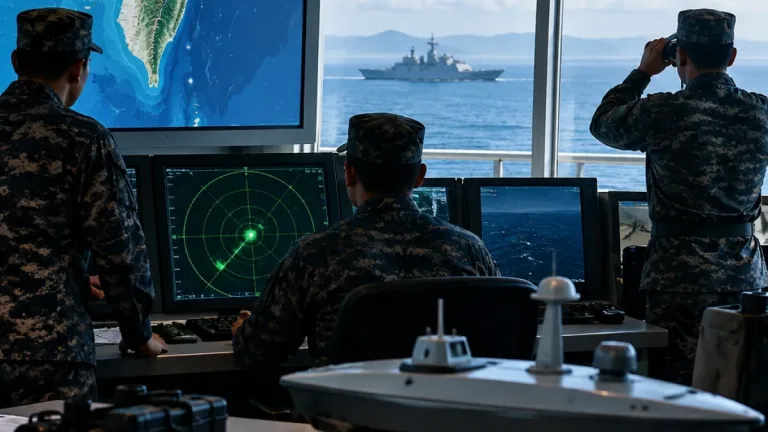

Chinese President Xi Jinping has renewed Beijing’s call for Taiwan’s reunification with the mainland, describing the objective as an unavoidable historical mission but stopping short of mentioning the use of military force. Taiwan’s government swiftly rejected the demand as tensions continue over the island’s political future.
Xi made the remarks on Thursday, 12 November 2026, in a speech marking the 160th birthday of Sun Yat-sen, the political leader associated with the 1911 revolution that ended China’s imperial dynasty and preceded the establishment of the Republic of China. While the speech largely focused on Sun’s legacy, Xi used the occasion to restate the Chinese Communist Party’s position on Taiwan.
“The historical trends are unstoppable. The complete reunification of our motherland must be realized, and it can, without doubt, be realized,” Xi said.
Xi also said reunification was an unwavering historical mission for the party and warned that Beijing would not allow what it described as activities supporting Taiwan independence. He said China would take account of “Taiwan’s realities” and the “interests and feelings” of people on the island, while invoking Sun Yat-sen’s opposition to the division of the country and nation.
Taiwan rejects Beijing’s position
The Taiwanese government rejected Xi’s remarks and said Taiwan would not accept submission to the rule of China’s Communist Party. The response reflects the central dispute between Beijing and Taipei: China claims sovereignty over Taiwan, while the island is self-governed and maintains its own democratic political system.
The division dates back to the Chinese civil war. After the Communists led by Mao Zedong gained control of the mainland in 1949, the Nationalists retreated to Taiwan. Since then, the People’s Republic of China and the Republic of China in Taiwan have each claimed to represent Sun Yat-sen’s political inheritance.
The issue remains diplomatically sensitive. Under the so-called One China policy, most countries recognise the Communist government on the mainland as the government of China, while many maintain unofficial economic, cultural and diplomatic relationships with Taiwan. The island’s status has therefore remained a continuing point of tension between Beijing, Taipei and countries that engage with both sides.
Military force not referred to in speech
Xi’s latest comments did not refer to the use of military force. The remarks nevertheless reaffirmed Beijing’s opposition to any move towards formal Taiwan independence and its insistence that reunification must ultimately take place. The Taiwanese government’s rejection indicates that the fundamental political disagreement remains unresolved.
- China’s position: Beijing describes reunification as an unavoidable historical mission and says it will not leave room for Taiwan independence activities.
- Taiwan’s response: The Taiwanese government says it will not accept rule by China’s Communist Party.
- Military reference: Xi’s speech renewed the reunification demand but did not mention military force.
For India, the development concerns the wider strategic environment in the Indo-Pacific, where China’s position on Taiwan remains one of the region’s most consequential security questions. The statements reported from Beijing and Taipei did not announce a new military operation, deployment or defence decision.