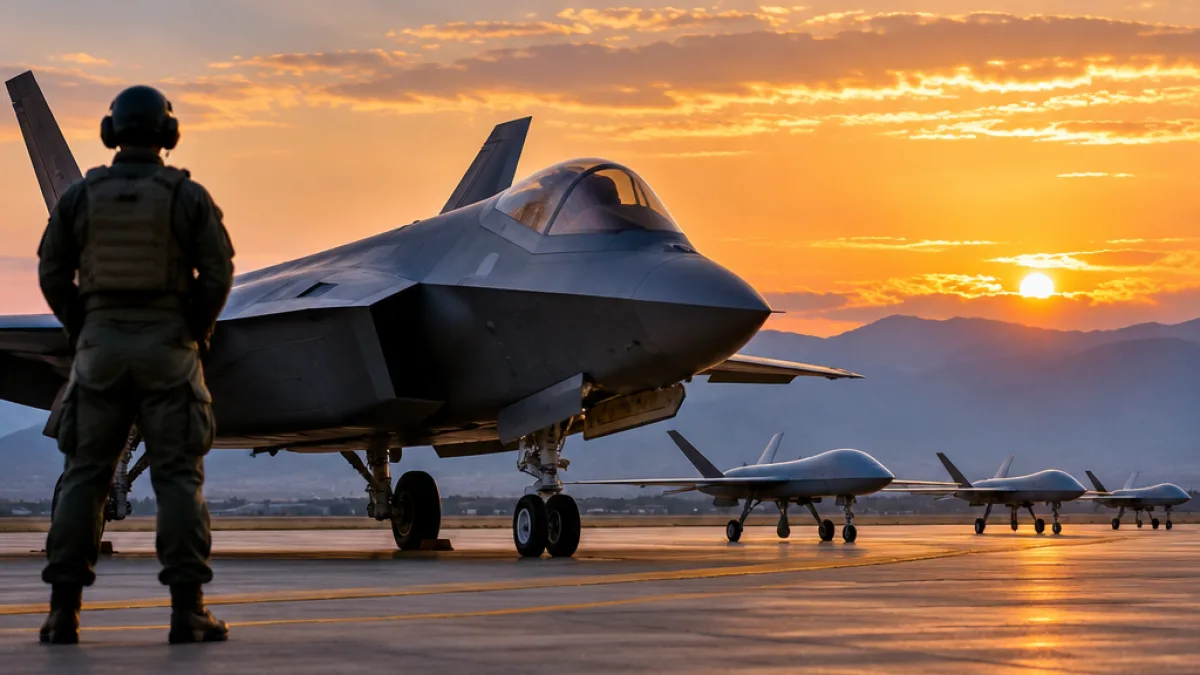
Air Chief Marshal Sir Harv Smyth, the RAF’s Chief of the Air Staff, has described the Global Combat Air Programme (GCAP) fighter as potentially Britain’s final crewed combat aircraft. The programme is being developed by the United Kingdom, Italy and Japan, with the three countries seeking to produce a sixth-generation stealth aircraft by 2035.
Sir Harv said the development of artificial intelligence-enabled uncrewed aircraft would bring a transformation in military aviation comparable to the move from propeller-driven aircraft to jets. The assessment places GCAP at a transition point between conventional fighter aviation and future air-combat systems in which autonomous platforms are expected to undertake an increasing share of high-risk tasks.
“The GCAP jet is perhaps the last crewed fighter we will ever build, not because people will become less important, quite the opposite.”
Writing in The Telegraph, Sir Harv said that AI and machines should be used to deal with the most dangerous missions, while human judgement and accountability remained central to the use of military force. He also said that the RAF’s future force would combine its existing crewed combat aircraft with autonomous systems.
- Programme: Global Combat Air Programme, involving the UK, Italy and Japan
- Aircraft: A sixth-generation stealth combat aircraft, informally called “Tempest”
- Target: A production aircraft by 2035
- UK contract: £4.6 billion signed in July for the design phase
GCAP combines crewed aircraft with autonomous systems
The aircraft is expected to include AI and next-generation sensors. The programme is being pursued as Western countries seek to retain air superiority against threats from Russia and China. The participating countries have assigned the industrial work to Edgewing, a joint venture involving Britain’s BAE Systems, Italy’s Leonardo and the Japan Aircraft Industrial Enhancement Company.
Although the GCAP aircraft will require a crew, Sir Harv said later projects were likely to move towards uncrewed fighters. He added that uncrewed fighter aircraft would begin flying in UK airspace in 2027, describing the development as both necessary and significant for the RAF.
“Used properly, AI and machines will tackle the most dangerous tasks instead of humans, but technology must enhance human judgment, not replace accountability.”
Sir Harv said the RAF would operate a mixed force of Typhoons, F-35s and autonomous systems. This indicates that GCAP is being developed alongside, rather than as an immediate replacement for, the service’s current fighter fleet.
Canada has observer status in the programme
Canada became an “observer nation” in July. Its status gives it privileged access to the scheme but no decision-making role. In October, Andy Burnham said that the UK was open to Germany joining the international coalition involved in developing the next-generation fighter.
GCAP’s design phase is therefore proceeding within a wider multinational framework, while the RAF’s chief has linked the programme to a longer-term move towards autonomous combat aviation. The aircraft will be crewed, but its development is being shaped by technologies intended to support future operations in which uncrewed platforms perform increasingly hazardous missions.