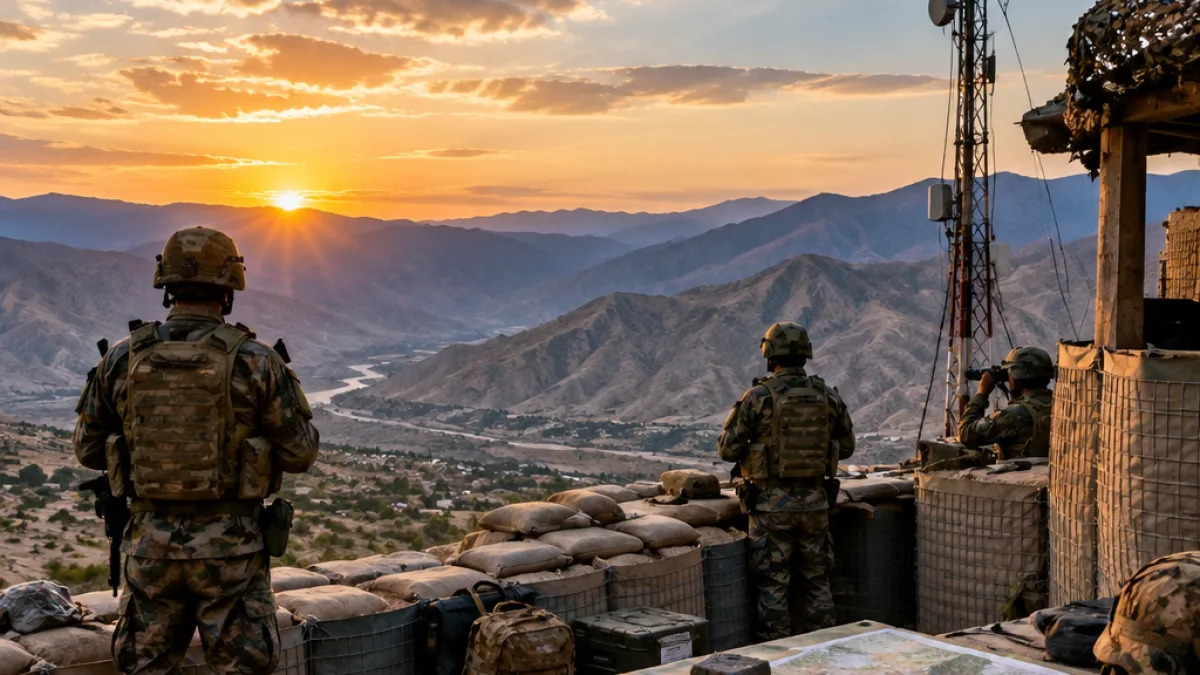
Pakistan’s Chief of Army Staff and Chief of Defence Forces, Field Marshal Syed Asim Munir, reaffirmed the security forces’ commitment to counter-terrorism operations during a visit to Miranshah in Khyber Pakhtunkhwa’s North Waziristan district on 20 November 2026. The visit came as Pakistan continued to report military action in Khyber Pakhtunkhwa and Balochistan, two provinces that have been particularly affected by terrorism.
The visit and the remarks were reported by the Inter-Services Public Relations (ISPR), the Pakistan military’s media wing. According to its statement, Munir was briefed on the security situation, intelligence-based operations and measures intended to consolidate gains from counter-terrorism efforts. He also met officers and troops and praised what the ISPR described as their preparedness and professionalism.
“He reaffirmed the unwavering resolve of the security forces, in close coordination with law enforcement agencies, to decisively eliminate the menace of terrorism and preserve the hard-earned peace and stability of Khyber Pakhtunkhwa,” the ISPR said.
Focus on Khyber Pakhtunkhwa operations
During the briefing, the ISPR said that the military leadership reviewed the prevailing security situation and ongoing intelligence-based operations. The statement did not provide operational details beyond those broad categories, but it presented coordination between the security forces and law-enforcement agencies as a central element of Pakistan’s response.
Munir also expressed appreciation for the Khyber Pakhtunkhwa police and its role in the campaign against terrorism. The ISPR said he recognised the force’s resilience and sacrifices, and used the term “Fitna-al-Khawarij” for the militant threat. The federal government uses that term for the banned Tehreek-i-Taliban Pakistan, according to the report.
- Location: Miranshah, North Waziristan district, Khyber Pakhtunkhwa
- Date: 20 November 2026
- Military leadership: Field Marshal Syed Asim Munir, Chief of Army Staff and Chief of Defence Forces
- Operations discussed: Intelligence-based operations and measures to consolidate counter-terrorism gains
Casualty figures reported by the military
The ISPR said on 14 November 2026 that four troops, including a major, were killed and 24 militants were killed in intelligence-based operations in Balochistan and North Waziristan in Khyber Pakhtunkhwa. These figures are claims by Pakistan’s military media wing and have been attributed to it.
The ISPR also reported that 74 militants were killed in intelligence-based operations in Khyber Pakhtunkhwa and Balochistan during the preceding week. The figures were presented in the context of Pakistan’s continuing campaign, but the statement did not provide further details of the individual operations.
Separately, the Islamabad-based Pakistan Institute for Conflict and Security Studies reported what it described as encouraging trends in the two provinces in its monthly assessment for October, according to Dawn. The assessment was cited alongside the military’s account of ongoing operations and did not alter the ISPR’s description of the security situation reviewed during Munir’s visit.