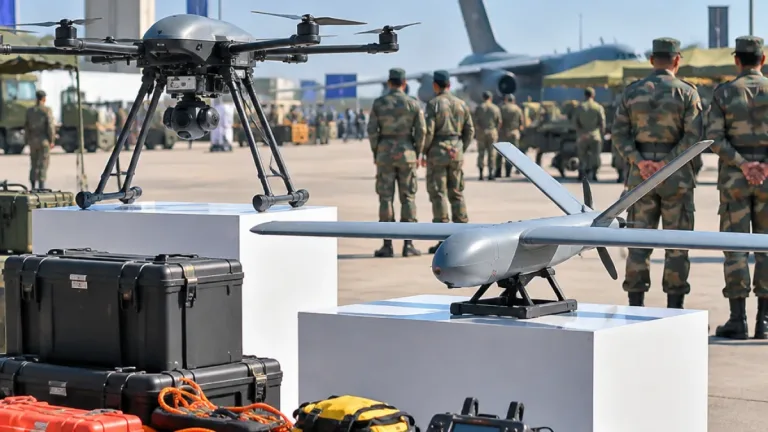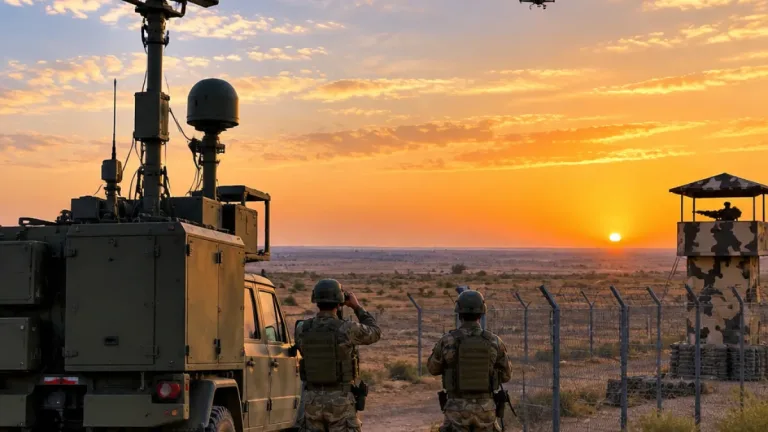
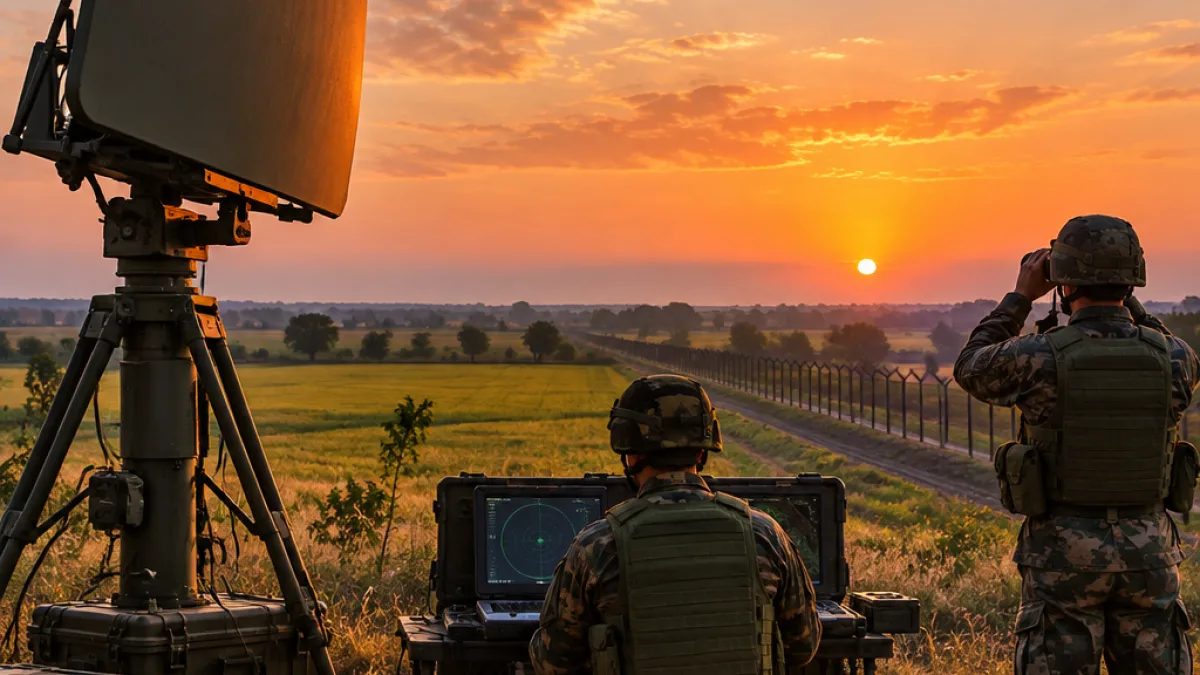
Security agencies in India are facing growing difficulty in stopping drones crossing from Pakistan, particularly into Punjab, where such platforms are being used to move narcotics, weapons, cash and explosives, according to people cited by The Tribune. The assessment highlights the challenge of detecting unmanned aircraft that use changing technologies, communications frequencies and operating altitudes.
The people quoted by the newspaper said drones crossed into Indian territory from Pakistan as many as four or five times a day in Punjab. They said the aircraft were increasingly equipped with satellite communication and advanced navigation systems, making them difficult for existing anti-drone systems to track and neutralise.
“A huge challenge”
The description was used by security sources cited by The Tribune while referring to the problem of countering Pakistani drones during Operation Sindoor. The newspaper also reported that the challenge persists outside active hostilities, as security and investigative agencies attempt to prevent drones from being used as low-cost delivery systems for illegal consignments.
Technology is changing the threat
A senior official cited by the newspaper said that foreign-made weapons were generally being transported into India through drones arriving from Pakistan. The official said that understanding the technology used by the aircraft, the frequencies on which they operate and the networks controlling them was critical because of the volume of drone activity reported in Punjab.
The problem is not limited to identifying an aircraft visually. Satellite communication can allow a drone to operate without relying solely on conventional control links, while advanced navigation systems can help it follow a planned route. The account published by The Tribune did not provide technical details of particular drone models or identify the anti-drone systems deployed at specific locations. It did, however, link the detection problem to changes in frequencies, navigation methods and operating altitudes.
Cross-border movement remains the primary concern
Security-establishment sources told the newspaper that the principal threat came from drones crossing the western border from Pakistan. They said there had been no reported cases of similar inter-state drone use within India in the context described. The reported pattern places Punjab at the centre of a security problem involving both border surveillance and the investigation of criminal and terror-related networks.
- Drones are reportedly being used to transport narcotics, arms, cash and explosives.
- Some aircraft are described as using satellite communication and advanced navigation systems.
- Security sources said tracking their technology, frequencies and operating networks is essential.
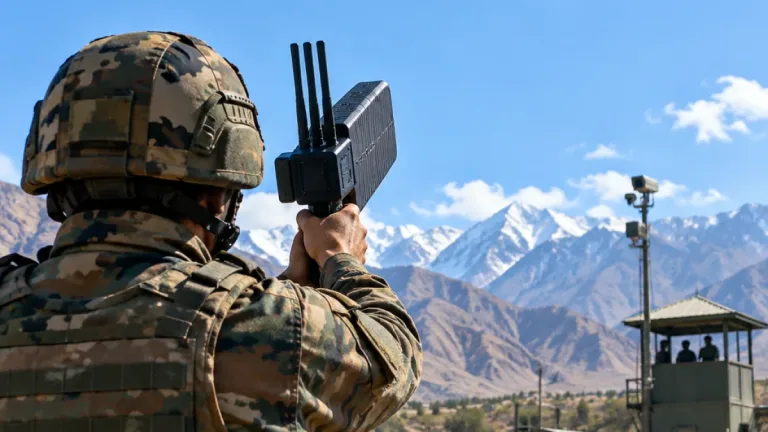
The recurring crossings underline the difficulty of relying on a single method to counter unmanned aircraft. According to the security sources cited by The Tribune, the requirement is to develop technology capable of detecting and blocking unauthorised drones before they enter Indian territory. The report does not state that a particular system has solved the problem, and the operational claims remain attributed to the newspaper’s sources.
For India’s border and internal-security agencies, the reported use of drones for repeated smuggling attempts links the counter-drone task to wider efforts against the movement of weapons, explosives and narcotics. The challenge described by the officials is therefore not only an airspace-monitoring issue but also a matter of preventing cross-border networks from using inexpensive unmanned platforms to deliver consignments into the country.