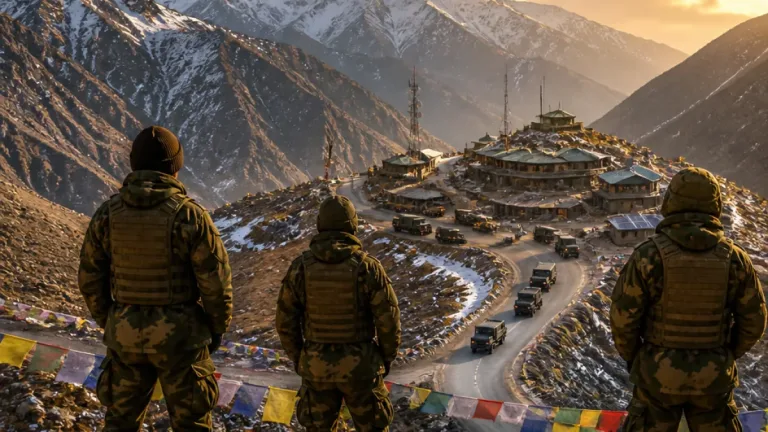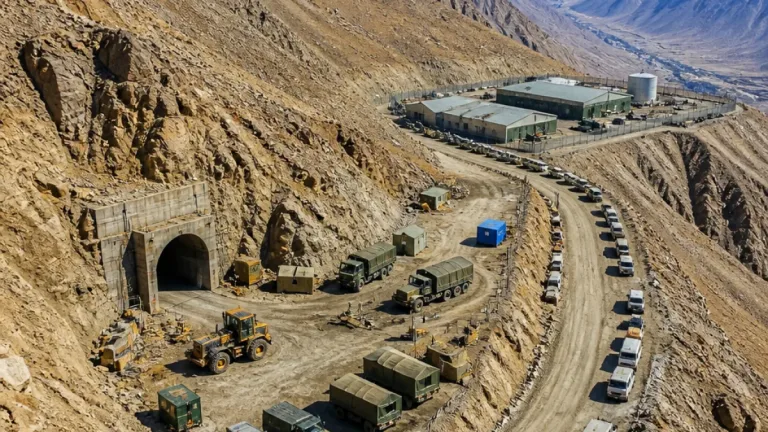
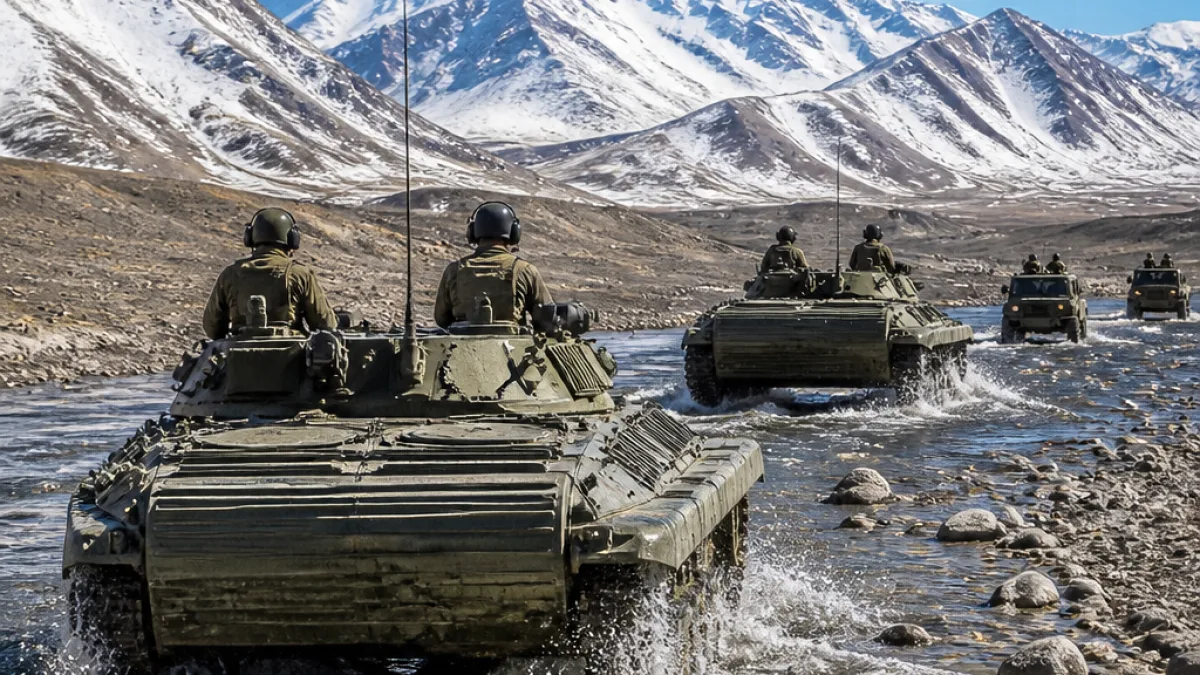
The Indian Army is conducting intensive high-altitude training for its mechanised forces in eastern Ladakh, with the programme aimed at maintaining the readiness of tanks and infantry combat vehicles deployed along the Line of Actual Control (LAC) with China.
The exercise is being conducted under the Leh-based 14 Corps, which said the training covers acclimatisation, crew proficiency, equipment management and coordination in a demanding operational setting. The Army’s formations in Ladakh operate in terrain where altitude and weather place specific demands on both personnel and platforms.
“The training is focused on acclimatisation, crew proficiency, equipment management and seamless coordination in a demanding operational environment.”
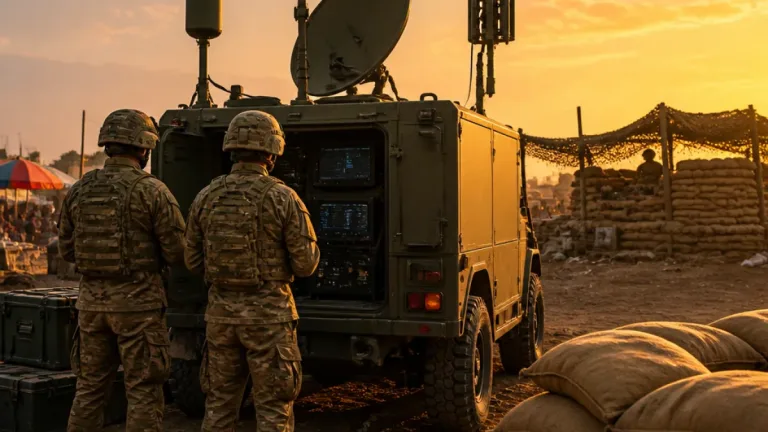
The visuals released by the Indian Army showed BMP-2 infantry combat vehicles negotiating water obstacles. Troops were also seen moving with light specialist vehicles fitted with mounted weapons. Some of the equipment visible in the imagery appeared to include counter-drone systems, although the Army’s statement did not identify the systems or provide details of their capabilities.
Training priorities in difficult terrain
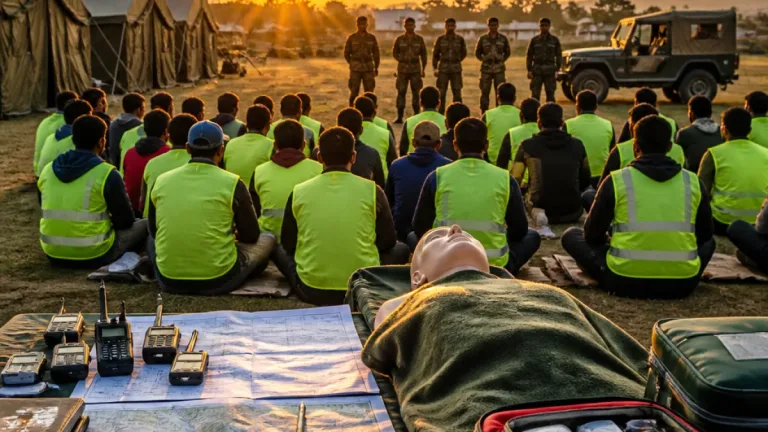
The Army said the activity reflects its focus on combat readiness, technological adaptation and operational effectiveness in challenging terrain. The training involved commanders refining tactical plans through sand-model discussions, alongside field activity involving mechanised platforms and their crews.
- Acclimatisation: preparing personnel for operations at high altitude;
- Crew proficiency: improving the handling and employment of armoured and infantry combat platforms;
- Equipment management: maintaining vehicles and associated systems in difficult conditions;
- Coordination: improving cooperation between troops and commanders during field manoeuvres.
Operating armoured vehicles at elevations of 13,000 feet and above differs significantly from their employment in the plains. Thin air reduces engine power, while sub-zero temperatures affect batteries and lubricants. Crews also require prolonged acclimatisation before they can undertake combat operations, according to the report on the training.
The exercise follows an operational-preparedness review by General Dhiraj Seth, Chief of the Army Staff, in the central sector of the LAC in Uttarakhand. During that visit, General Seth called for “sustained operational vigilance” and greater integration of technology in response to evolving security challenges.
The training also comes amid continuing tensions along the LAC. Shatrujeet Kapur, Director General of the Indo-Tibetan Border Police, said in the previous week that face-offs with Chinese troops were continuing at several locations in Arunachal Pradesh. The statement concerned Arunachal Pradesh and was separate from the Army’s account of mechanised training in Ladakh.
By combining vehicle manoeuvres, crew training, equipment upkeep and tactical planning, the Army’s programme is directed at keeping mechanised units prepared for the conditions found in high-altitude areas. The Army’s statement did not disclose the number of vehicles or personnel involved, nor did it specify the identity of the counter-drone equipment visible in the released imagery.