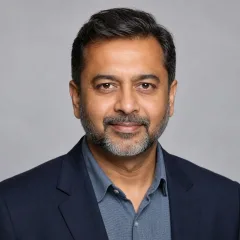
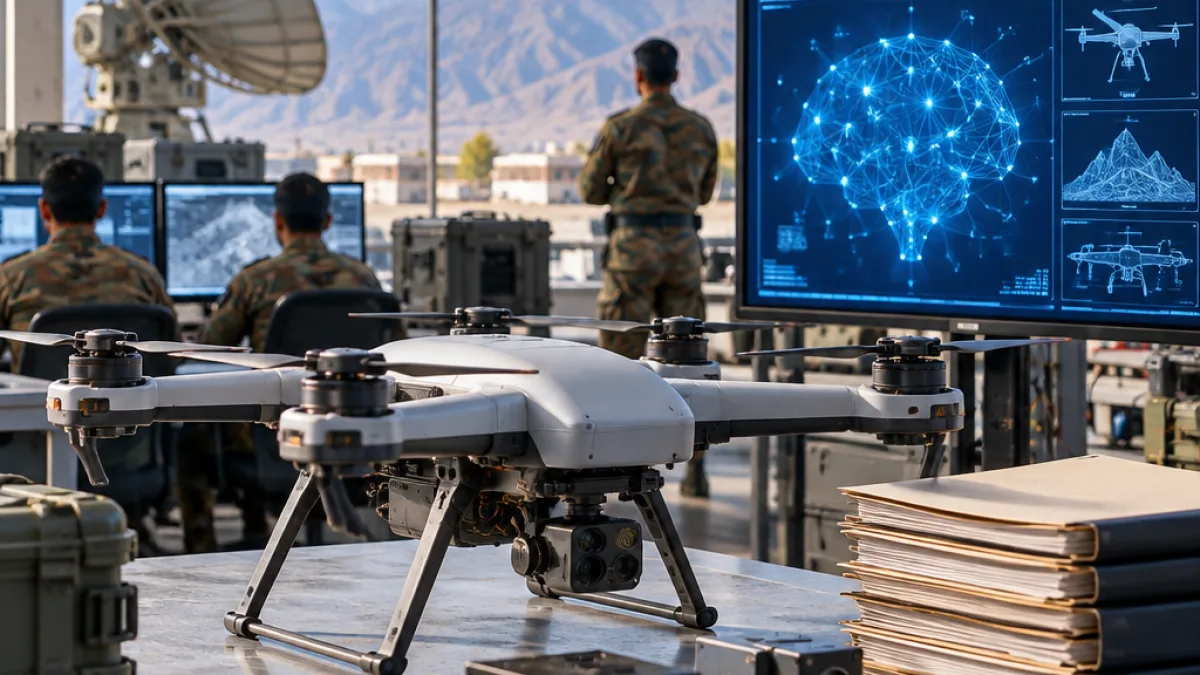
India’s private defence industry has called for artificial intelligence-enabled procurement, faster testing and more predictable government orders to help domestic manufacturers expand their capabilities. The proposals were made at the ANI National Security Summit 3.0 in New Delhi by Raphe mPhibr Chairman Vikas Mishra and Nibe Limited Executive Director Balaji Sominathan.
AI proposed for acquisition paperwork
Mishra said AI could be used to reduce the administrative burden involved in preparing Requests for Information, Requests for Proposal and Expressions of Interest. He said procurement officials may handle as many as 40 projects, with the volume of work contributing to delays even when those delays are not intentional.
“AI could reduce paperwork and delays in preparing Requests for Information (RFI), Requests for Proposal (RFP) and Expressions of Interest (EoI).”
Vikas Mishra, Chairman of Raphe mPhibr
According to Mishra, an RFP for a standard military truck can extend to nearly 120 pages and operates as a binding legal contract. He suggested that AI-assisted preparation of such documents could make the acquisition process two to three times faster. The proposal relates to the preparation of procurement documents; it does not represent a change to any specific defence contract or an announcement of a new purchase.
| Issue identified | Proposal or figure cited |
|---|---|
| Procurement workload | Officials may handle as many as 40 projects |
| RFP size | A standard military truck document can run to nearly 120 pages |
| Potential acceleration | AI could make preparation two to three times faster |
Industry seeks a more predictable route to orders
Sominathan said the government needed to move beyond encouraging private participation and actively enable the sector. He identified three priorities for defence manufacturers: predictable order pipelines, faster testing and validation by government agencies.
“The government needed to move from merely encouraging private participation to actively enabling it.”
Balaji Sominathan, Executive Director of Nibe Limited
He also questioned tender eligibility rules that assess deep-technology companies largely on turnover and existing balance sheets. In his view, such criteria may not fully reflect the engineering capability or development potential of newer companies. The remarks place emphasis on how firms developing critical technologies are assessed before they can compete for military programmes.
Calls for protection and banking flexibility
Mishra further sought more flexible policies and institutional protection for officials who take calculated decisions under the General Financial Rules. He argued that concerns about legal consequences could discourage procurement decisions. The industry also called for more flexible banking rules, although the remarks did not specify a particular regulatory amendment or financing mechanism.
The demands come as Indian defence manufacturers seek a larger role in developing and supplying military technologies. The focus of the discussion was on the acquisition process, testing and government validation rather than on a particular platform, weapon system or order. No contract value, quantity or delivery schedule was announced at the summit in connection with these proposals.
- AI use: proposed for RFI, RFP and EoI preparation.
- Industry priorities: predictable orders, quicker testing and government validation.
- Policy concerns: tender criteria, official decision-making protections and banking flexibility.