Defence Secretary Rajesh Kumar Singh said on 24 October 2026 that India has become the third-largest exporter of arms to Europe, driven by rising procurement under the European Union’s ‘ReArm Europe’ initiative and a decade-long expansion of the country’s defence manufacturing ecosystem. He put India’s total defence exports at ₹38,424 crore (around 3.6 billion euros).
Manufacturing base and export mix
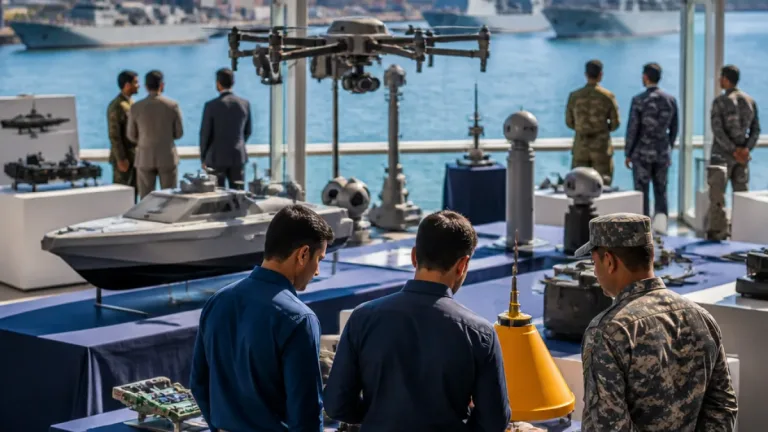
Mr Singh described the domestic industry as a broad network of public, private and small enterprises. He said it now comprises 16 major public sector companies, about 840 large and medium private firms and nearly 17,000 small enterprises, including start-ups. According to his remarks, India exports defence products to more than 80 countries.
- Export range: artillery and ammunition, small arms, helmets, bulletproof jackets and other tactical equipment.
- Europe demand driver: increased orders for standard ammunition and artillery shells linked to the EU’s ‘ReArm Europe’ push.
- Policy aim: prioritise Indian-designed, developed and manufactured products in capital expenditure.
Policy targets and partnerships
The Defence Secretary reiterated a government objective that 75 per cent of annual defence capital expenditure — estimated at 20 to 25 billion dollars annually in his remarks — be sourced domestically, with preference for Indian-designed and manufactured systems. He also said Indian manufacturers are drawing international interest, especially from Southeast Asian countries, for a variety of systems including small arms, components and artillery gun systems.
On closer industrial ties with Europe, Mr Singh said India plans to expand participation in European defence procurement through joint ventures with European partners and to attract European companies to manufacture in India under the Make in India framework. He framed greater integration of Indian and European defence supply chains as a way to serve international demand and deepen cooperation.
| Figure | Detail |
|---|---|
| ₹38,424 crore | India’s defence exports (as stated) |
| 16 | Major public sector defence companies |
| ~840 | Large and medium private defence enterprises |
| ~17,000 | Small enterprises and start-ups in the defence supply chain |
| 75% | Target share of annual defence capital expenditure to be sourced domestically |
Mr Singh’s comments frame the current growth as both demand-led, from buyers including European states, and supply-driven, by the expanding Indian industrial base. He signalled a continuing policy push to channel capital procurement to domestic industry while seeking partnerships abroad to scale exports and integrate supply chains.