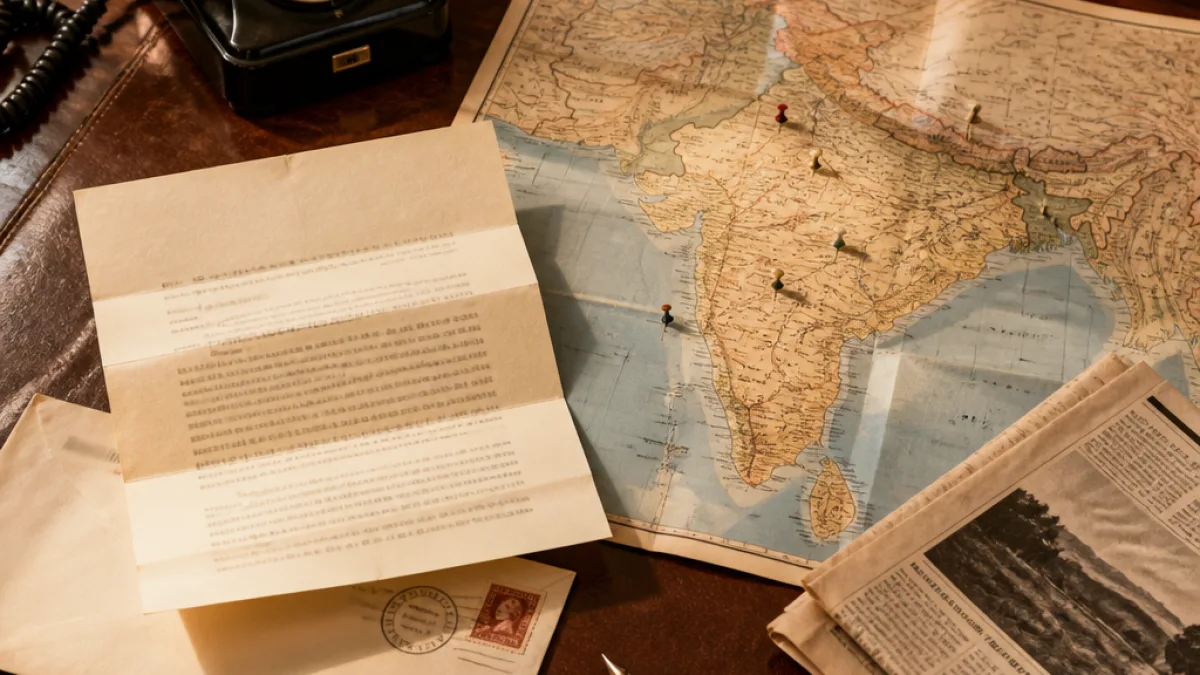
Declassified records in the US State Department archives reveal that in the aftermath of the 1962 Sino‑Indian War the United Kingdom and the United States explored a plan to bind India and Pakistan into a common defence against China. The correspondence includes a letter dated 13 December 1962 from British prime minister Harold Macmillan to US president John F. Kennedy proposing a combined security framework for the subcontinent, the archives show.
Archival proposal and its components
The Macmillan letter, as preserved in the State Department files, proposed linking immediate Western military assistance to longer‑term political measures, notably a negotiated settlement of Kashmir, and envisaged “limited Western commitments” potentially extending a Western nuclear umbrella to both India and Pakistan through regional arrangements. The correspondence framed these steps as a strategic response to China’s October–November 1962 offensive along the Himalayan frontiers.
- Date of proposal: 13 December 1962 (Macmillan to Kennedy, State Department archives)
- Context: Chinese offensives began on 20 October 1962; China announced a unilateral ceasefire on 21 November 1962 and withdrew from most occupied territory in the east, while retaining Aksai Chin
- Core ideas: short‑term military aid tied to a Kashmir settlement, limited Western defence commitments, and regional nuclear guarantees
Why the plan mattered — and why it collapsed
The archival material explains the proposal as born of immediate concern over China’s capabilities and intentions after the war, when New Delhi’s requests for Western military assistance were fresh. It sought a political package to reduce the risk of an enlarged Communist threat on the subcontinent by encouraging India and Pakistan into closer security cooperation.
The effort ultimately did not succeed. The archival record and subsequent historical accounts indicate deep distrust between New Delhi and Islamabad, the political sensitivity of Kashmir, and India’s insistence on non‑alignment under prime minister Jawaharlal Nehru as key obstacles. The proposal therefore collapsed without producing the intended pact.
Timeline
| Date | Event |
|---|---|
| 20 October 1962 | Coordinated Chinese offensives begin in Ladakh and the North‑East Frontier Agency |
| 21 November 1962 | China announces unilateral ceasefire and withdraws from most eastern occupied areas |
| 13 December 1962 | Harold Macmillan writes to John F. Kennedy proposing a joint India‑Pakistan defence, according to US State Department archives |
The State Department files offer fresh documentary detail on Western thinking in late 1962 but do not record any successful outcome. The material underlines how the military shock of the 1962 war prompted Western capitals to consider unconventional regional arrangements, and how political realities in South Asia prevented those plans from taking hold.