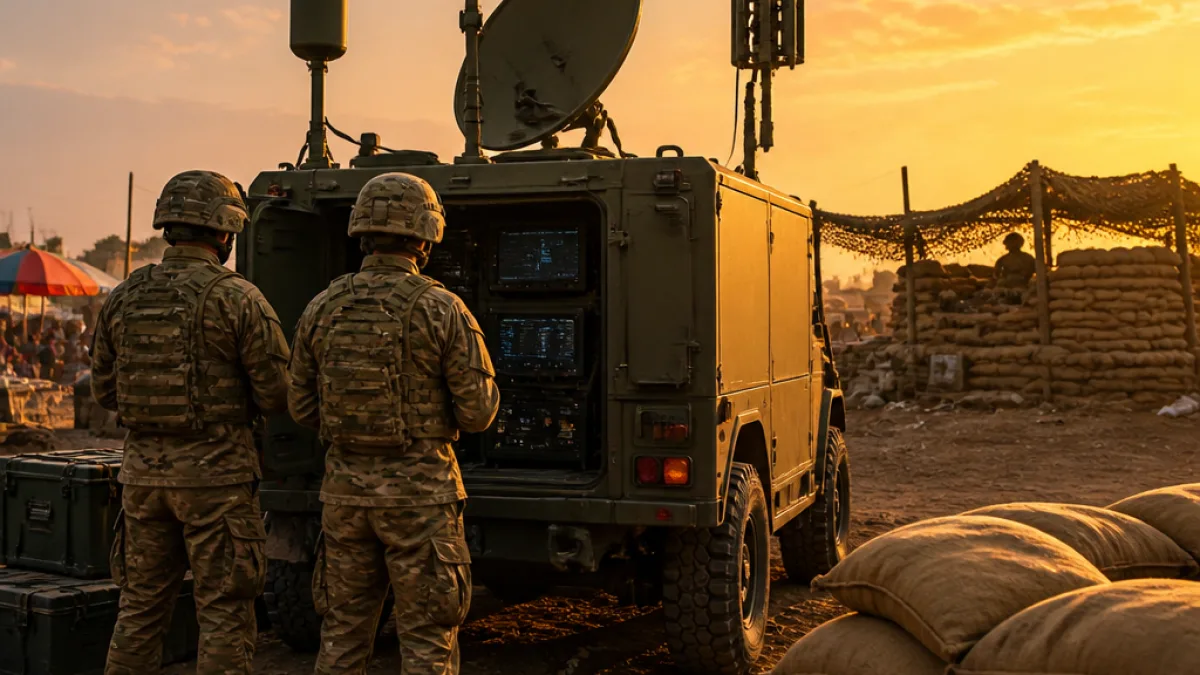
Chinese peacekeepers have deployed anti-drone detection and jamming equipment in Abyei after a drone attack on a market in the disputed region on 19 October 2026 killed members of the United Nations peacekeeping force. China’s Ministry of National Defence said the measures were intended to protect civilians, secure personnel and prevent further aerial attacks.
A Chinese peacekeeping rapid-response force was sent to reinforce a Pakistani infantry battalion serving with the United Nations Interim Security Force for Abyei (UNISFA), according to a statement reviewed by Radio Dabanga. The force returned to its camp after the security situation stabilised, the ministry said.
Detection, jamming and surveillance
During the reinforcement mission, the Chinese contingent deployed specialised systems designed to detect and jam unmanned aircraft. The equipment was used alongside wider defensive measures around the market and the surrounding area, according to China’s Ministry of National Defence.
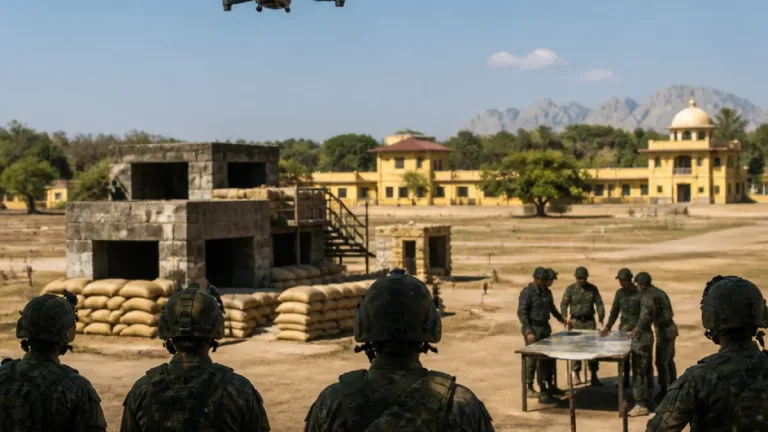
The operation also included surveillance drones. The Chinese force used them to monitor the market continuously, observe the surrounding area and support the protection of civilians and security personnel, the ministry said. Its personnel maintained an armed presence around the clock, monitored the airspace and secured the perimeter.
- Location: Abyei, the disputed region between Sudan and South Sudan
- Trigger for deployment: a drone attack on a market on 19 October 2026
- Equipment reported: anti-drone detection and jamming systems, along with surveillance drones
- Mission: reinforce a Pakistani infantry battalion and strengthen protection for civilians and peacekeepers
The attack involved UNISFA personnel, although the number of casualties was not given in the statement cited by Radio Dabanga. The United Nations force requested Chinese assistance to reinforce the Pakistani battalion after the incident, the outlet reported.
China’s defence ministry said the rapid-response force completed the reinforcement mission after the security environment improved and then returned to its camp. UNISFA leadership praised the Chinese peacekeepers for what it described as a swift and professional response, saying their intervention helped protect lives and property and contributed to stability in the area.
A counter-UAS mission in a peacekeeping zone
The Abyei operation combines several layers of counter-unmanned aircraft activity: detection, electronic disruption, aerial surveillance and physical protection of a secured perimeter. The deployment followed an attack rather than a routine training activity, placing counter-drone equipment directly within a peacekeeping mission tasked with protecting civilians and supporting security in a contested border region.
For defence establishments monitoring the spread of drone warfare, the operation illustrates how unmanned aircraft can create security challenges beyond conventional battlefields. It also shows the use of electronic countermeasures and surveillance drones as part of a wider force-protection mission, rather than as standalone equipment.