US President Donald Trump has again claimed credit for ending the four-day military confrontation between India and Pakistan in May 2025 by threatening both countries with steep tariffs, an assertion New Delhi has repeatedly rejected.
What Trump said at his Florida rally (IST)
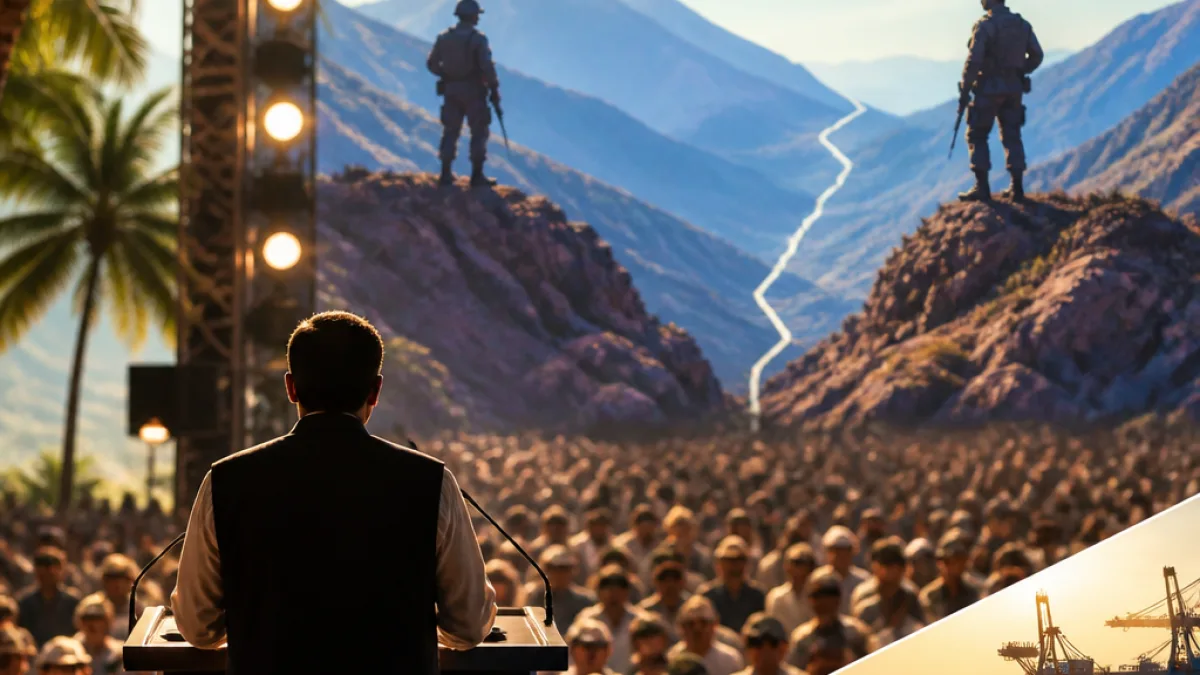
Speaking at a midterm election rally in Florida on Saturday, 24 October 2026 (IST), Trump told supporters that he warned New Delhi and Islamabad they would not be allowed to trade with the United States if they continued fighting. According to the Press Trust of India, he said he threatened “massive tariffs” of 250 per cent on both countries and credited that threat with ending the hostilities.
“You stop India and Pakistan, two nuclear nations... I said, 'Fellas, if you guys are going to do that, you're not going to trade with the United States... I'm going to put massive tariffs on both of you, 250 per cent, so you won't be able to do any business'.” — Donald Trump, quoted by PTI
Trump also said, according to PTI, that “eleven planes were shot down” during the confrontations and that his intervention had stopped the fighting. He said he did not involve the United Nations in the effort.
India's position
India has consistently rejected assertions that the United States mediated or imposed conditions that ended the May 2025 military exchanges. New Delhi has maintained that the understanding to cease military action was reached directly between the two countries' Directors General of Military Operations (DGMsO) on 10 May 2025, after India launched Operation Sindoor on 7 May 2025 following the 22 April 2025 terror attack in Pahalgam.
- India's account: a bilateral military-level understanding between the DGMsO led to the pause in operations.
- Trump's account: a US threat of 250% tariffs compelled both sides to stop fighting.
| Claim | Source |
|---|---|
| Tariff threat ended hostilities | Donald Trump, quoted by PTI |
| Ceasefire understanding reached bilaterally on 10 May 2025 | Indian government statements |
The May 2025 episode saw India say it had carried out strikes against terrorist infrastructure in Pakistan and Pakistan‑administered Kashmir after the Pahalgam attack; Pakistan and Indian public accounts of operational details and damage have differed since the incident. Trump’s repeated public claims about US leverage in that crisis have been met by official Indian denials that Washington brokered the halt to military action.
Reporting of the rally remarks by PTI and other Indian outlets has once again brought the 2025 confrontation into public discussion in both countries, but official Indian statements continue to attribute the cessation of military exchanges to the direct exchanges between the countries’ military leadership rather than to external economic threats.