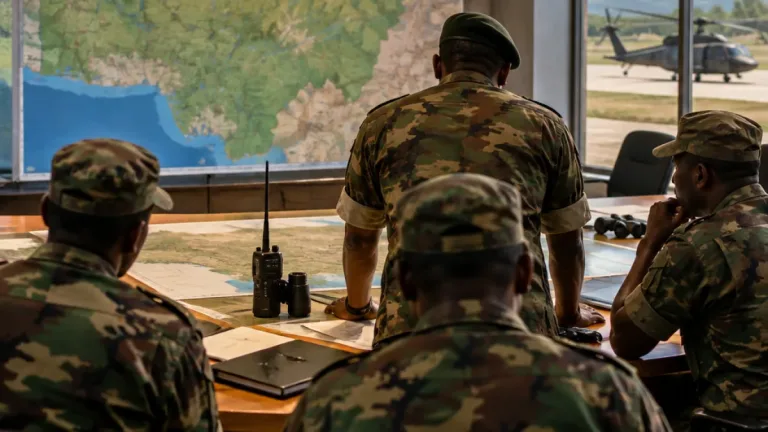
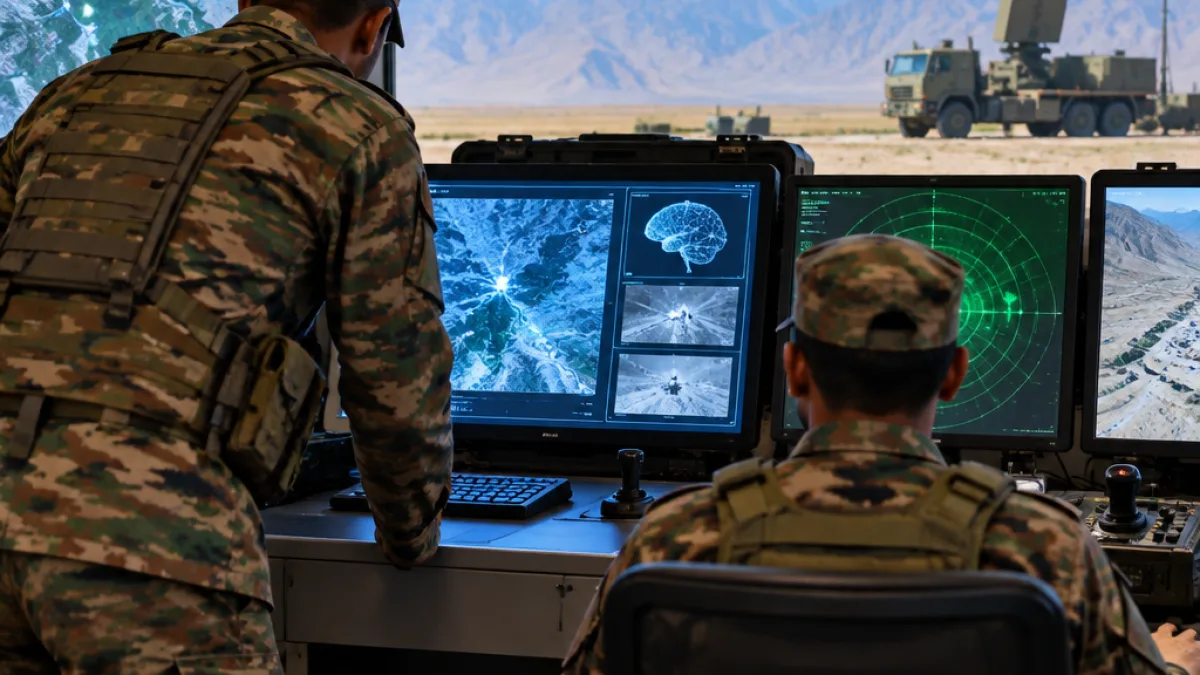
US President Donald Trump and Chinese President Xi Jinping agreed during their meeting in China that human beings must remain involved in military decisions assisted by artificial intelligence, US Treasury Secretary Scott Bessent told CNBC last week. The reported understanding concerns the use of what the Voice of America report calls “SI”, commonly known as AI.
The position has not appeared in a joint written statement issued after the talks. That distinction is significant because the account of the understanding rests on Bessent’s description rather than a formal document released by Washington or Beijing. It also comes as the two countries compete for leadership in advanced artificial intelligence and related technologies.
Agreement reported amid technology rivalry
Washington has attempted to preserve its technological advantage by restricting China’s access to advanced technologies and high-end computer chips. At the same time, the United States has permitted some sales under licence, including Nvidia’s H200 processors, according to the report.
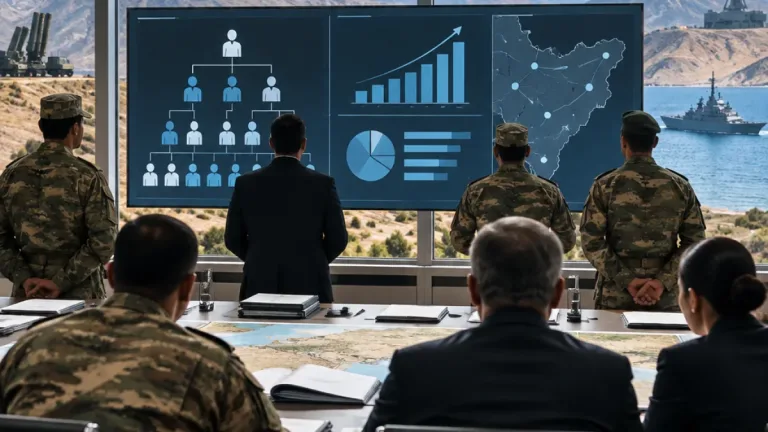
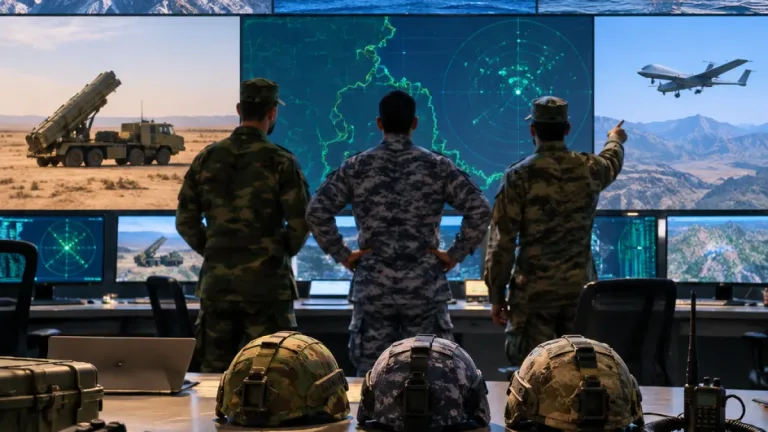
The military dimension of the competition has raised questions about how far commanders may rely on machine-generated recommendations during a conflict. Kitsch Liao, associate director of the Atlantic Council’s Global China Hub, said the People’s Liberation Army had sought to use AI to accelerate military decision-making and act faster than opposing forces.
“AI mistakes that cost human lives will happen repeatedly until a catastrophic error forces everyone to reconsider,” Kitsch Liao, associate director of the Atlantic Council’s Global China Hub, told VOA.
Liao said he supported the understanding attributed to Trump and Xi, but argued that it would require clearly defined boundaries around decisions that cannot be delegated to machines. Without such limits, he said, military commanders could increasingly depend on automated recommendations when operating under the pressure of wartime conditions.
Calls for practical safeguards
The Atlantic Council expert also said there were not enough concrete scenarios showing how an AI failure might start a war, intensify an existing confrontation or extend hostilities. He called for that work to be undertaken before a serious error forced governments to reconsider the risks.
- The reported US-China understanding keeps human involvement at the centre of military decisions supported by AI.
- No written statement released after the leaders’ meeting recorded the agreement.
- Experts cited by VOA warned that unclear limits could allow machine recommendations to gain influence during wartime.
Concerns about retaining human control are not limited to defence applications. On 22 November, Alexandr Wang, Meta’s chief AI officer, published an essay on X titled “Superintelligence is Arriving”. He warned that the expanding capabilities of AI could create a risk of humanity losing control over the technology.
“We should not be okay with a ‘handover’ of society to AI,” Alexandr Wang, Meta’s chief AI officer, wrote.
Wang also said it was difficult to imagine a future in which people maintained control over a form of superintelligence that was “1000x smarter and more capable than humans in every field”. The comments place the military debate within a wider argument over whether advanced systems should be permitted to make decisions with consequences for human life and national security.