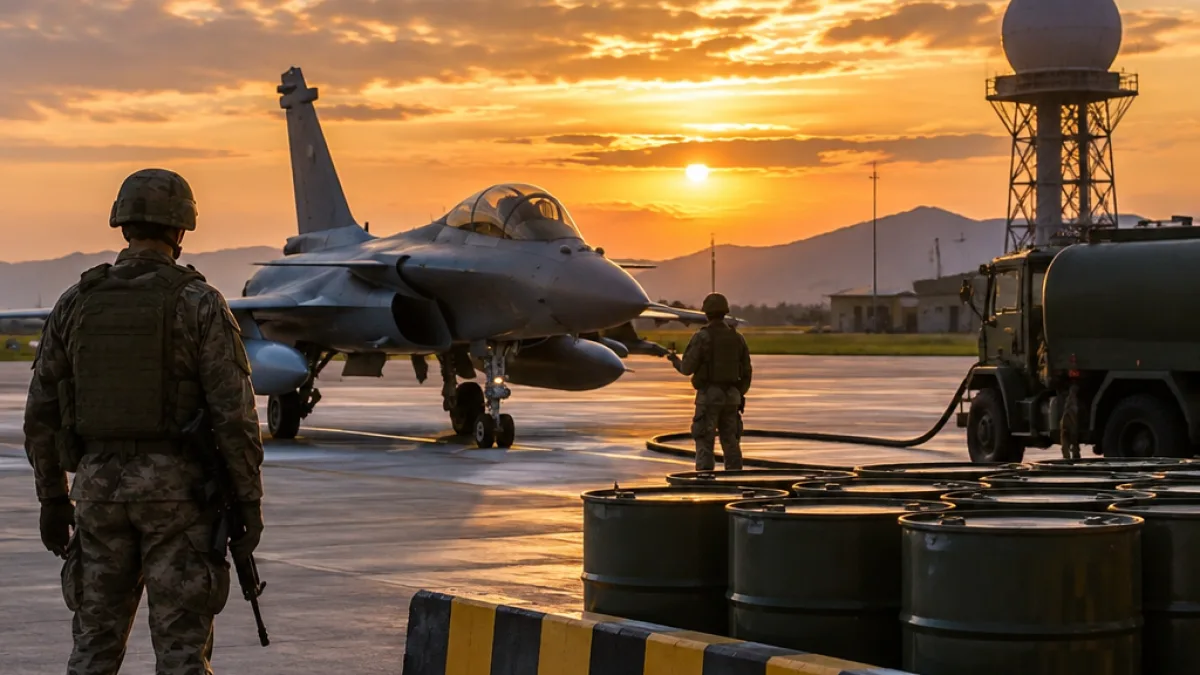
The United Kingdom has imposed sanctions on five senior Myanmar military leaders after the International Court of Justice ruled that the country committed genocide during the 2017 military campaign against the Rohingya. The measures were announced by UK Foreign Secretary David Miliband as Britain also prepared legislation to stop the supply of aviation fuel to Myanmar.
The individuals named for sanctions are Myo Htut Hlaing, Myo Min Tun, Myat Thet Oo, Kyaw Soe and Kyaw Swar Oo. Miliband said Myanmar President Min Aung Hlaing, who was sanctioned by the UK in 2021, was “directly responsible for many of the atrocities that have happened” because he led the military at the time of the 2017 genocide.
“Myanmar must stop ongoing violations, investigate, prosecute and punish perpetrators, and prevent such an atrocity from ever happening again.”
Miliband also called for an immediate pause in hostilities to allow humanitarian assistance to reach affected communities. He demanded an end to air strikes on civilians, the release of political prisoners and dialogue aimed at an inclusive political settlement. The United Kingdom is due to raise the matter at the United Nations Security Council this week, with a dedicated meeting planned in a fortnight, according to the foreign secretary.
Measures announced by Britain
| Measure | Details |
|---|---|
| Sanctions | Five senior Myanmar military leaders were targeted |
| Aviation fuel | New legislation is planned to stop supplies to Myanmar |
| Diplomatic action | The Myanmar defence attaché was expelled last week |
| International action | The UK will raise the issue at the UN Security Council |
The ICJ ruling, delivered last Thursday, found that “genocidal intent is the only reasonable inference that can be drawn from the evidence” examined by the court. The decision was reached by a nine-to-six majority among the judges. The court also found by majority that Myanmar had violated several other provisions of the 1948 Genocide Convention.
According to the ruling cited in the British parliamentary statement, about 10,000 Rohingya were killed during the clearance operation in western Rakhine state, which borders Bangladesh and the Bay of Bengal. Reports also described villages being burnt and women and girls being subjected to sexual violence. Myanmar denied the allegations against it.
Continuing conflict and regional pressure
Miliband said that more than 1.2 million refugees had fled Myanmar and were being supported by Bangladesh. The humanitarian burden therefore remains concentrated in a country bordering India’s wider neighbourhood and the Bay of Bengal region.
The British government’s announcement also referred to continuing air strikes and violence involving the Arakan Army. It follows the UK’s expulsion of Myanmar’s defence attaché last week, after the ICJ ruling. Myanmar was known as Burma until 1989, and its military leadership has remained under international scrutiny since Aung San Suu Kyi was removed by the military in 2021.
- Five Myanmar military leaders face new UK sanctions.
- Britain plans legislation targeting aviation-fuel supplies to Myanmar.
- The UK is seeking action at the UN Security Council after the ICJ ruling.
The measures combine financial and diplomatic pressure with a demand for an end to ongoing violence and access for humanitarian aid. The British government has also called for political prisoners to be released and for talks towards an inclusive political settlement, while the conflict and displacement crisis continue across Myanmar and along the country’s border with Bangladesh.