More than 85 per cent of Pakistan’s military hardware is of Chinese origin, Chief of the Naval Staff Admiral Krishna Swaminathan said at the ANI National Security Summit 3.0 in New Delhi on Monday, 16 November 2026. He said India was closely monitoring the capabilities of neighbouring countries, while maintaining a distinction between Pakistan and China at the national level.
“The fact that more than 85 per cent of the hardware Pakistan currently has in its armed forces is of Chinese origin, with some of Turkish origin but largely Chinese, is something we take note of. We are fully aware of the capabilities they possess,”
Admiral Swaminathan’s comments place the assessment in the context of the expanding defence relationship between Pakistan and China. He said the Indian Navy did not approach maritime security through the conventional framework of a one-front or two-front war because “the sea is contiguous”. The Navy chief said India had powerful surface ships, aerial assets and submarines to deal with potential threats.
Eight-submarine acquisition under watch
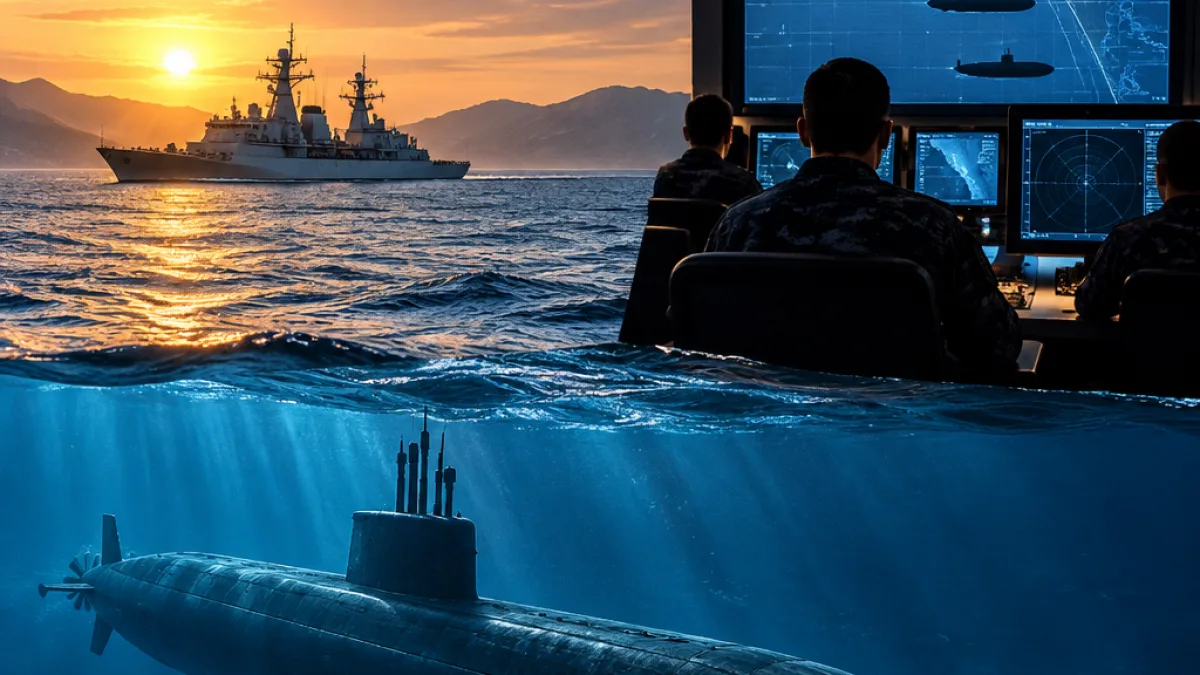
The Navy chief also referred to Pakistan’s planned acquisition of eight Hangor-class submarines. He described the boats as a formidable addition to the Pakistan Navy’s capabilities and said the acquisition involved a capability that the service had not possessed before. His remarks were framed as an assessment of a planned acquisition, rather than an announcement that all eight submarines had entered service.
| Development | Assessment reported by the Navy chief |
|---|---|
| Pakistan’s military hardware | More than 85 per cent of Chinese origin; some equipment is of Turkish origin |
| Planned submarine acquisition | Eight Hangor-class submarines |
| Indian response | Monitoring capabilities and assessing the submarines’ operational strengths and potential threats |
Admiral Swaminathan said India was aware of the increasing importance of submarine warfare, particularly in the Indian Ocean Region, and was strengthening its own underwater fleet. He said the Indian Navy had a “robust plan” to deal with the threats posed by the submarines if they became a threat, adding that the service knew how to tackle them.
Maritime security beyond a two-front framework
The Navy chief’s formulation reflects the service’s emphasis on the maritime domain as a connected operating environment. Rather than treating threats as separate land fronts, he said the Navy considered the sea to be contiguous and relied on a combination of surface ships, aerial assets and submarines. The statement also indicates that India’s assessment is focused on the capabilities held by Pakistan and China separately, even as Pakistan’s equipment is largely sourced from China.
For India, the immediate issue identified by the Navy chief is the underwater dimension of Pakistan’s naval modernisation. The planned Hangor-class acquisition is being examined for its operational strengths and the threats it could pose, while the Indian Navy is strengthening its own submarine force. The comments provide the service’s public assessment of the development without stating that the Pakistani submarines have already been delivered or deployed.
- Admiral Krishna Swaminathan said over 85 per cent of Pakistan’s military hardware is of Chinese origin.
- Pakistan’s planned acquisition of eight Hangor-class submarines is being assessed by the Indian Navy.
- The Navy chief said maritime security is viewed through a contiguous-sea framework rather than a conventional one-front or two-front model.