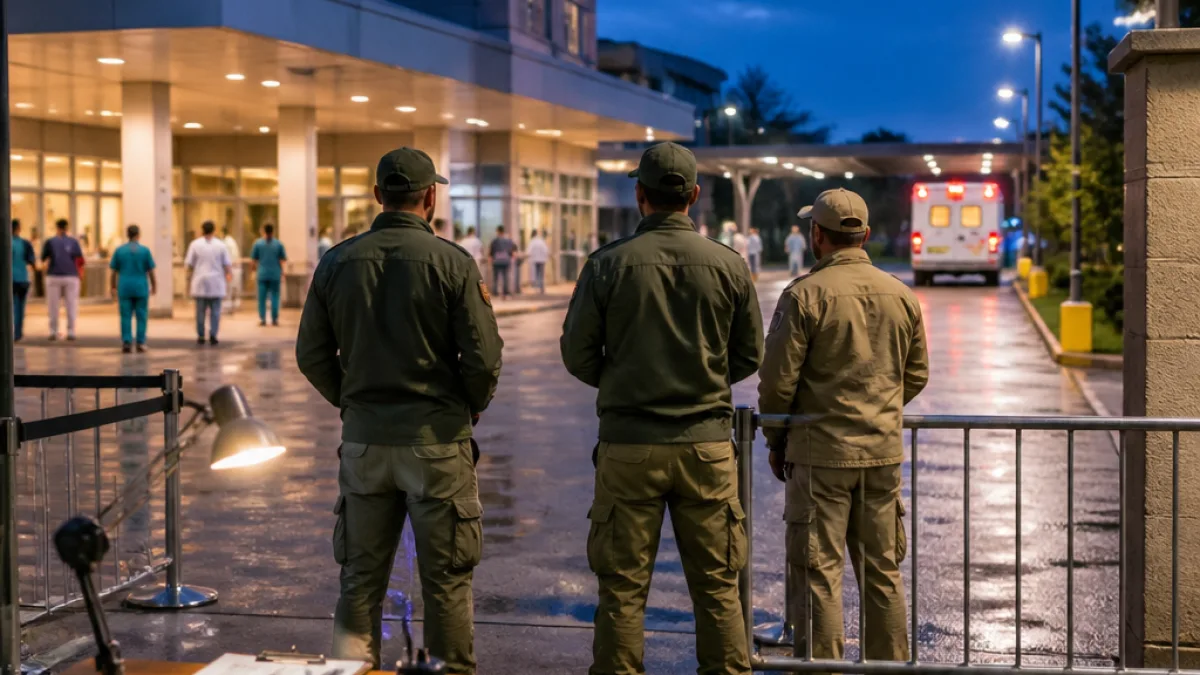
Mahatma Gandhi Memorial Medical College and Hospital (MGMMCH), Jamshedpur, will move to a phased security overhaul that places ex‑servicemen in front‑line guarding roles, hospital officials said. The state‑run facility intends to replace 120 home guards with former military personnel by the end of 2026, with deployment staged so that routine services are not disrupted.
Why the change is being made
Hospital authorities described repeated confrontations on the campus as the principal reason for the decision. Officials said tensions commonly rise in the emergency, casualty and ward areas after deaths during treatment or when disputes develop between attendants and staff. That pressure, they said, has at times produced safety concerns for health workers and left wards and exits insufficiently monitored.
“When tension rises, the safety of doctors, nurses and other health workers is at risk. Treatment of other patients also suffers if the crowd is not controlled quickly,” a senior doctor posted in the emergency ward said.
Hospital superintendent Dr Balram Jha told reporters the objective is a rapid response mechanism capable of reaching trouble spots quickly, managing crowds and coordinating with police when required. He said preparations are under way to introduce the new security system in phases and that a detailed deployment plan will follow administrative approval.
What ex‑servicemen will do
Officials set out the intended duties for the ex‑servicemen as including:
- crowd control in high‑pressure locations such as emergency and casualty wards;
- ward surveillance and preventing unauthorised departures from patient areas;
- regulating access at gates and elevators; and
- providing quick intervention and liaison with local police during incidents.
The hospital has cited past incidents in which patients reportedly left wards unnoticed or attempted to jump from windows as further justification for tighter surveillance of vulnerable points.
Implementation and oversight
Hospital officials emphasised the change will be gradual to avoid operational disruption. A detailed deployment schedule and administrative approvals remain pending. The officials did not provide specifics on recruitment sources, terms of engagement for the ex‑servicemen, or whether the hires will be drawn from central pensionable cadres or local veteran organisations.
| Item | Detail reported |
|---|---|
| Number of positions | 120 (to replace home guards) |
| Target completion | by the end of 2026 |
| Main duties | Crowd control, ward surveillance, gate/elevator access, rapid intervention |
The hospital’s plan links two policy areas of interest to readers: veteran employment and civilian security arrangements. The use of ex‑servicemen for static and responsive security has precedent in other public institutions and may provide disciplined personnel trained in crowd management. Hospital officials framed the move as both a safety measure for staff and patients and a mechanism to ensure faster coordination with law enforcement during high‑tension episodes.